


AI agents depend on a reliable data infrastructure. Whether an AI agent is used for lead generation, market intelligence, recruiting workflows, enrichment, or research automation, the quality of its outputs depends heavily on the quality, freshness, and structure of the underlying data.
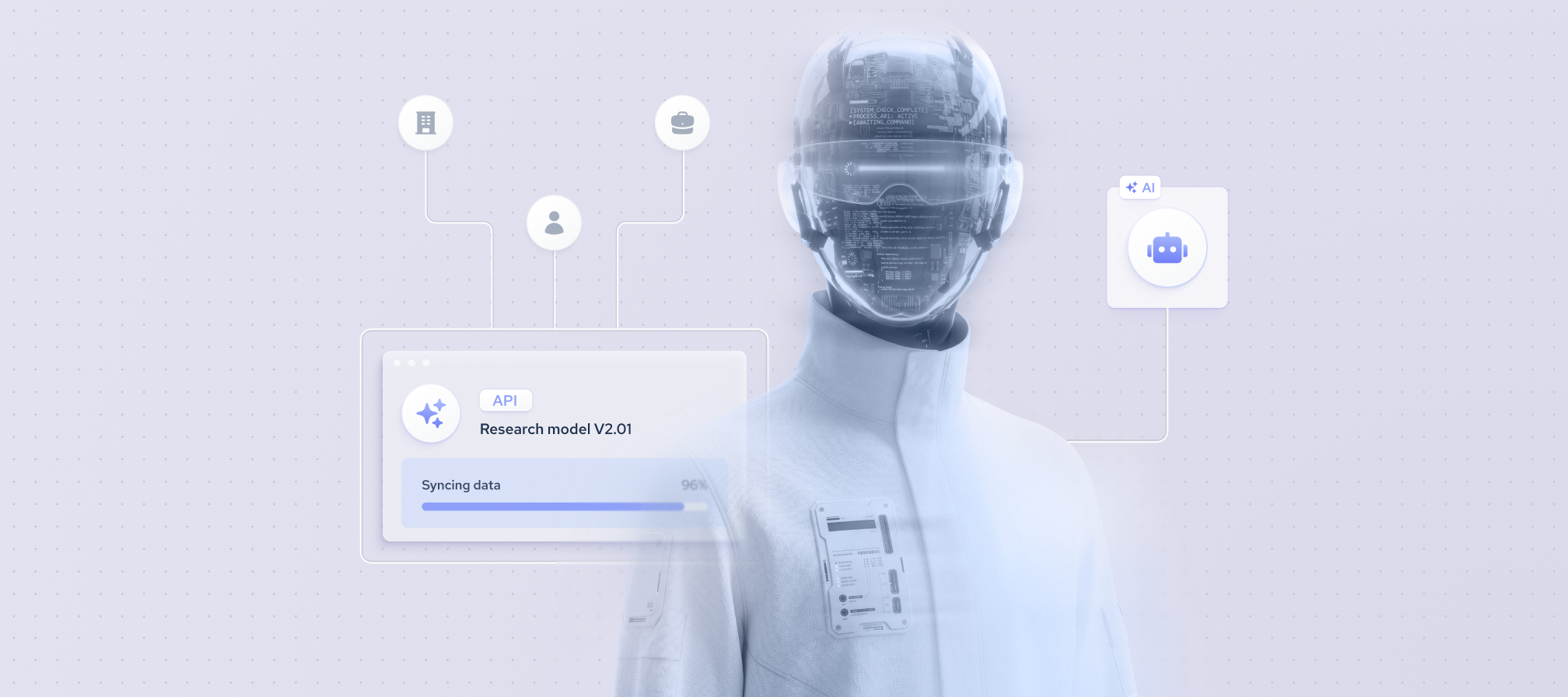
Modern AI systems rely on several types of datasets for AI workflows, including bulk datasets for model training and historical analysis, APIs for real-time retrieval, and agentic interfaces such as MCP servers and natural language search. The right delivery method depends on the use case. Large structured datasets support offline analytics, enrichment, and machine learning pipelines, while APIs and agent-oriented retrieval systems help AI agents access current information and interact with live business data.
This article explores the best data sources for AI agents in 2026, what makes data infrastructure AI-ready, and what to look for in a reliable provider of company, employee, and jobs data for agentic systems.
What makes a dataset AI-agent-ready?
An AI-ready dataset is data that AI agents and automated pipelines can easily understand, access, filter, update, and use in real-world workflows. It is not just a large data file, but structured, reliable, and operationally usable data infrastructure.
AI-agent-ready datasets typically include:
- Structured, machine-readable formats such as JSONL, CSV, or Parquet with clear schemas, metadata, and documentation
- Cleaned, enriched, and deduplicated records that reduce noise and inconsistent entity naming
- Frequent updates or real-time API access for agents that rely on current information
- Context-rich records that connect company, employee, jobs, funding, location, and hiring data
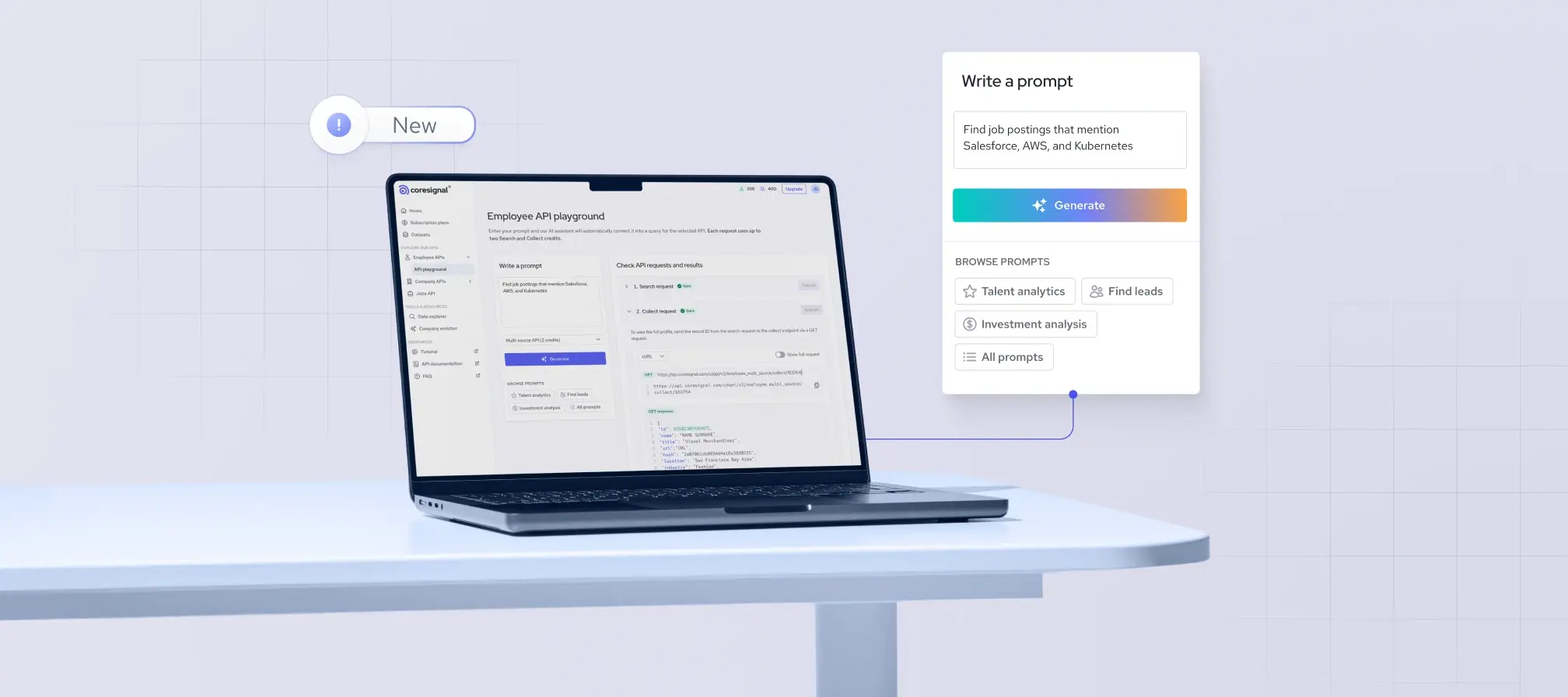
- Flexible delivery methods, including bulk datasets, APIs, MCP servers, webhooks, natural language search, and Agentic Search APIs
- Historical depth that allows agents to analyze changes in hiring, headcount, funding, and workforce movement over time
- Ethical sourcing from publicly available web data with transparent usage rights
- Selective field access that helps teams reduce unnecessary processing costs and data volume
The best AI-ready data providers combine large-scale historical datasets with real-time retrieval infrastructure, making the same data usable for model training, enrichment, analytics, and live agent workflows.
Types of data needed for B2B AI agents
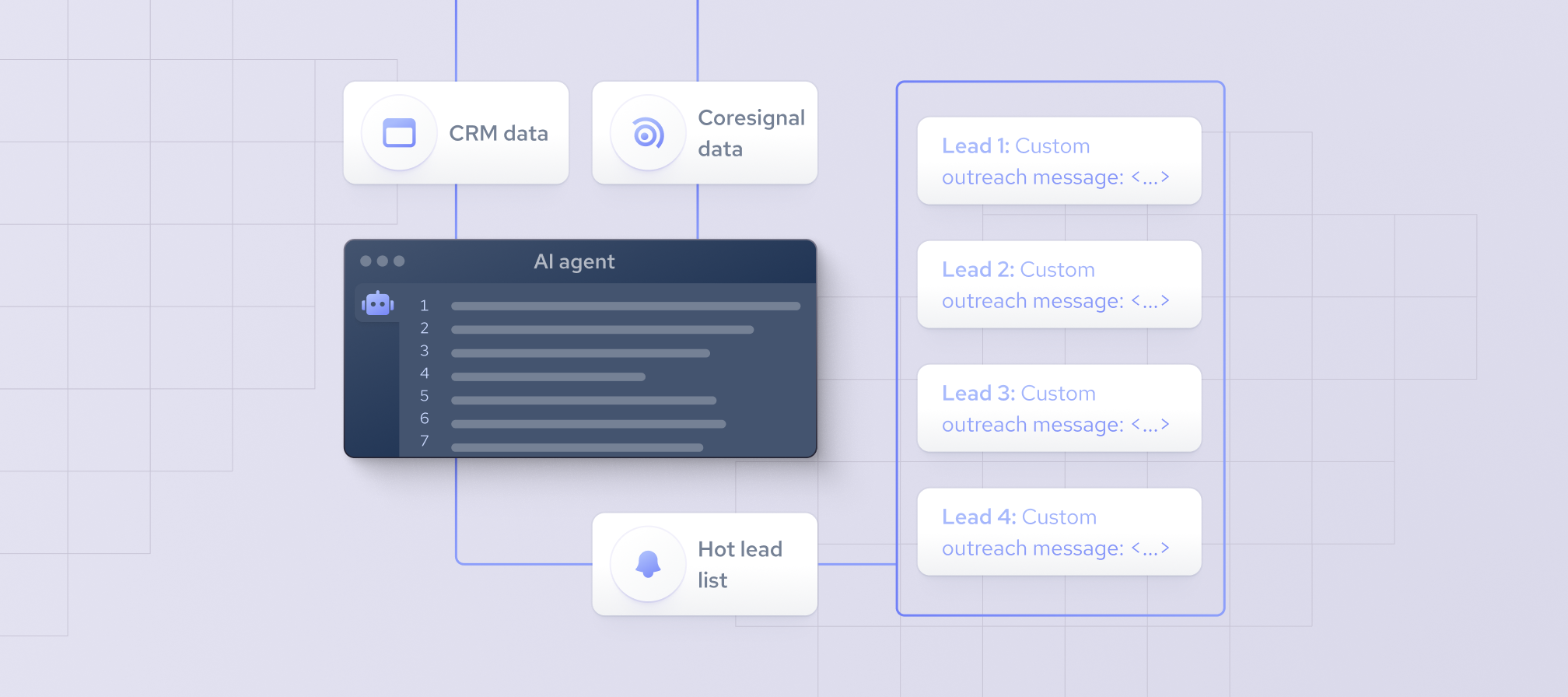
AI agents for B2B workflows rely on context-rich business data that is structured, machine-readable, frequently updated, and easy to integrate into automated systems. This data helps agents reason across workflows, retrieve relevant context, identify patterns, and generate more accurate outputs for sales, recruiting, market intelligence, analytics, and research tasks.
Below are some of the most important data categories used in AI-agent workflows.
Company data
Company data provides foundational business context, including industry, company size, locations, growth indicators, funding activity, technographics (technology stack and tools in use), and organizational structure. AI agents use this data to segment accounts, prioritize leads, identify market opportunities, and support enrichment and research workflows.
Employee data
Employee data helps AI agents understand workforce composition, organizational changes, seniority structures, and career movement patterns. It is commonly used in recruiting, talent intelligence, workforce analytics, and sales workflows that depend on identifying decision-makers, hiring trends, or organizational growth signals.
Jobs and hiring signals
Job data helps AI agents analyze hiring activity in real time and over time. This includes job postings, hiring velocity, open roles, skills demand, geographic hiring patterns, and expansion signals. AI agents use jobs data to identify buying intent, monitor labor market trends, detect company growth, and support AI-driven matching, forecasting, and workforce intelligence systems.
Market and financial data
Market and financial data includes funding activity, mergers and acquisitions, revenue indicators, and broader market movements. AI agents use this information to evaluate company momentum, monitor industries, and support investment and competitive intelligence workflows.
Behavioral and interaction data
Behavioral data includes customer interactions, engagement signals, support activity, and product usage patterns. AI agents use this data to personalize recommendations, predict churn, improve customer support workflows, and generate more context-aware responses across sales and marketing systems.
Traditional datasets vs AI-ready data infrastructure
Traditional datasets for AI remain essential for model training, historical analysis, offline enrichment, and large-scale batch processing. Structured bulk data in formats such as JSONL or Parquet is still widely used for analytics pipelines, machine learning workflows, and long-term research.
AI-ready data infrastructure adds another layer on top of these datasets: real-time retrieval, flexible APIs, MCP servers, semantic and natural language search, webhooks, and machine-readable documentation. Instead of ingesting a full dataset only once, AI agents increasingly need to retrieve the right data at the right moment as workflows, prompts, and business context change dynamically.
The difference is not between “old” and “new” data systems, but between different methods of accessing and applying data within AI workflows. Below is a more direct comparison between the two.
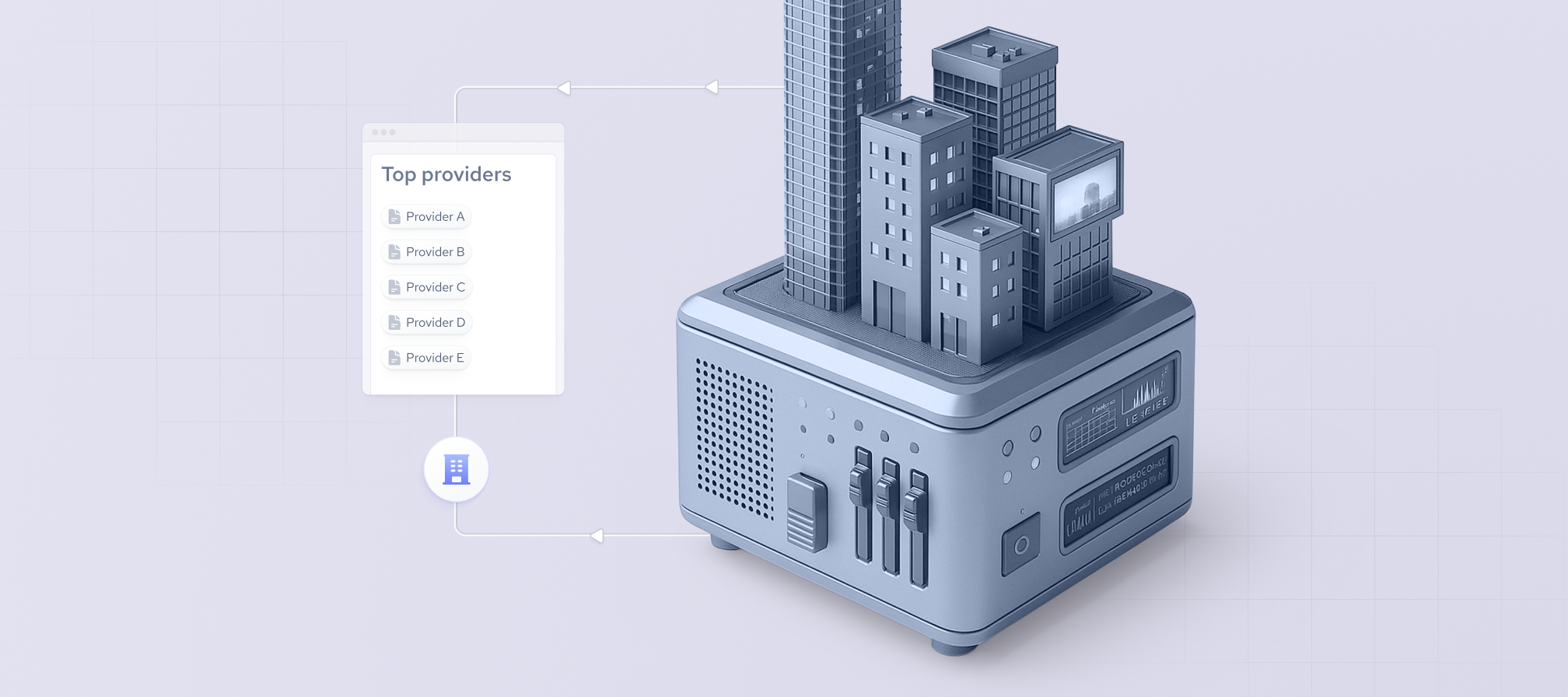
Top data providers for AI agents in 2026
The best data provider depends on the AI agent’s use case, whether it is prospecting, enrichment, recruiting, market intelligence, investment research, or deep research workflows. This list focuses on B2B providers of AI-ready data evaluated based on freshness, historical depth, entity coverage, scalability, API access, and agent-ready capabilities.
Coresignal: real-time AI-ready company, employee, and jobs data infrastructure
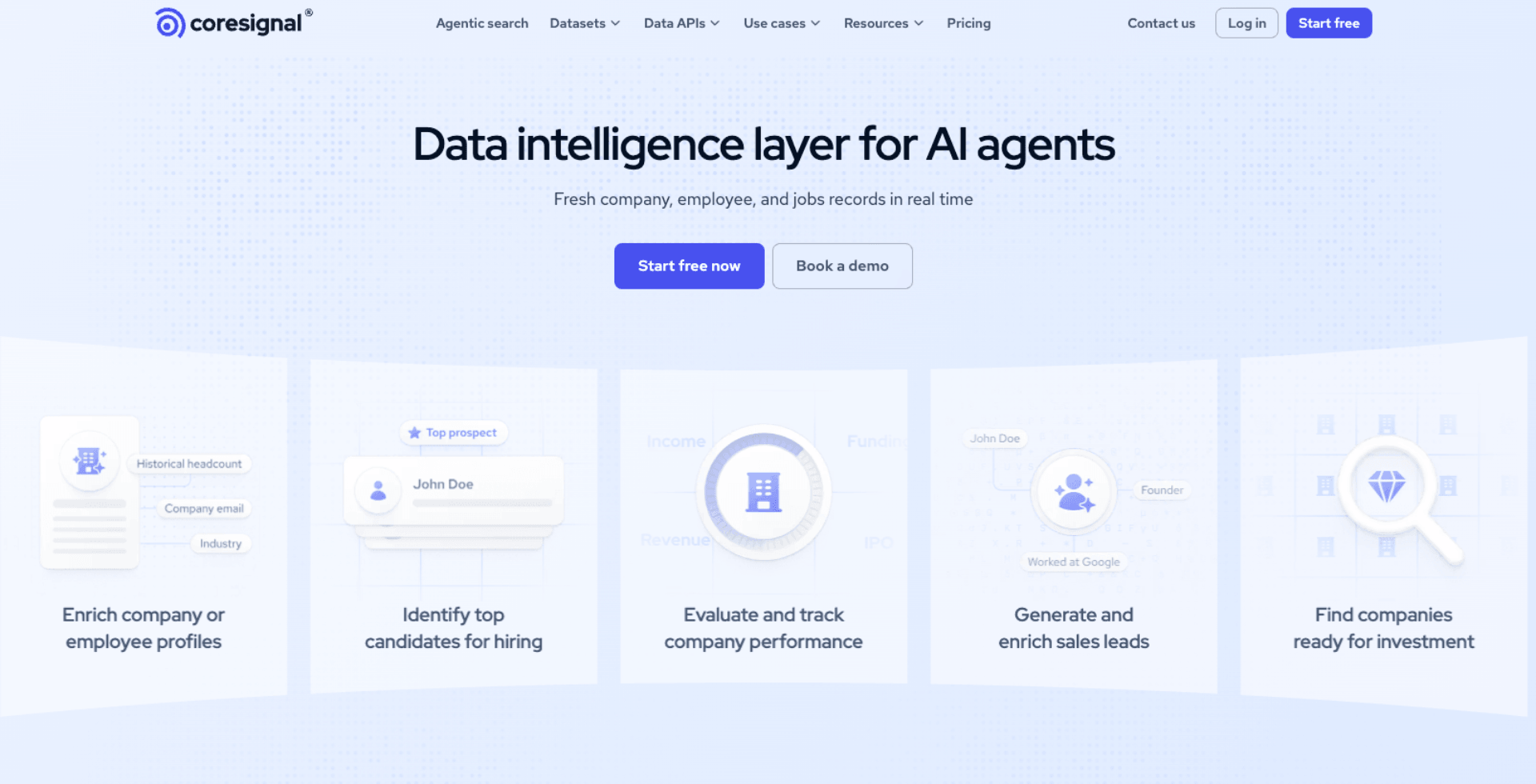
Coresignal provides AI-ready real-time B2B data infrastructure for agents, analytics platforms, and enrichment workflows. Its multi-source company, employee, and jobs datasets include firmographics, career history, job postings, hiring signals, headcount data, technographics, and growth indicators collected from publicly available web sources worldwide.
Coresignal supports multiple access methods depending on the workflow, including bulk datasets for model training and historical analysis, real-time APIs for live retrieval, Agentic Search API for natural language querying, and MCP support for agentic systems. Data is cleaned, deduplicated, machine-readable, and structured for downstream AI, enrichment, and automation workflows.
Bright Data Deep Lookup: AI-powered search engine for complex entity research
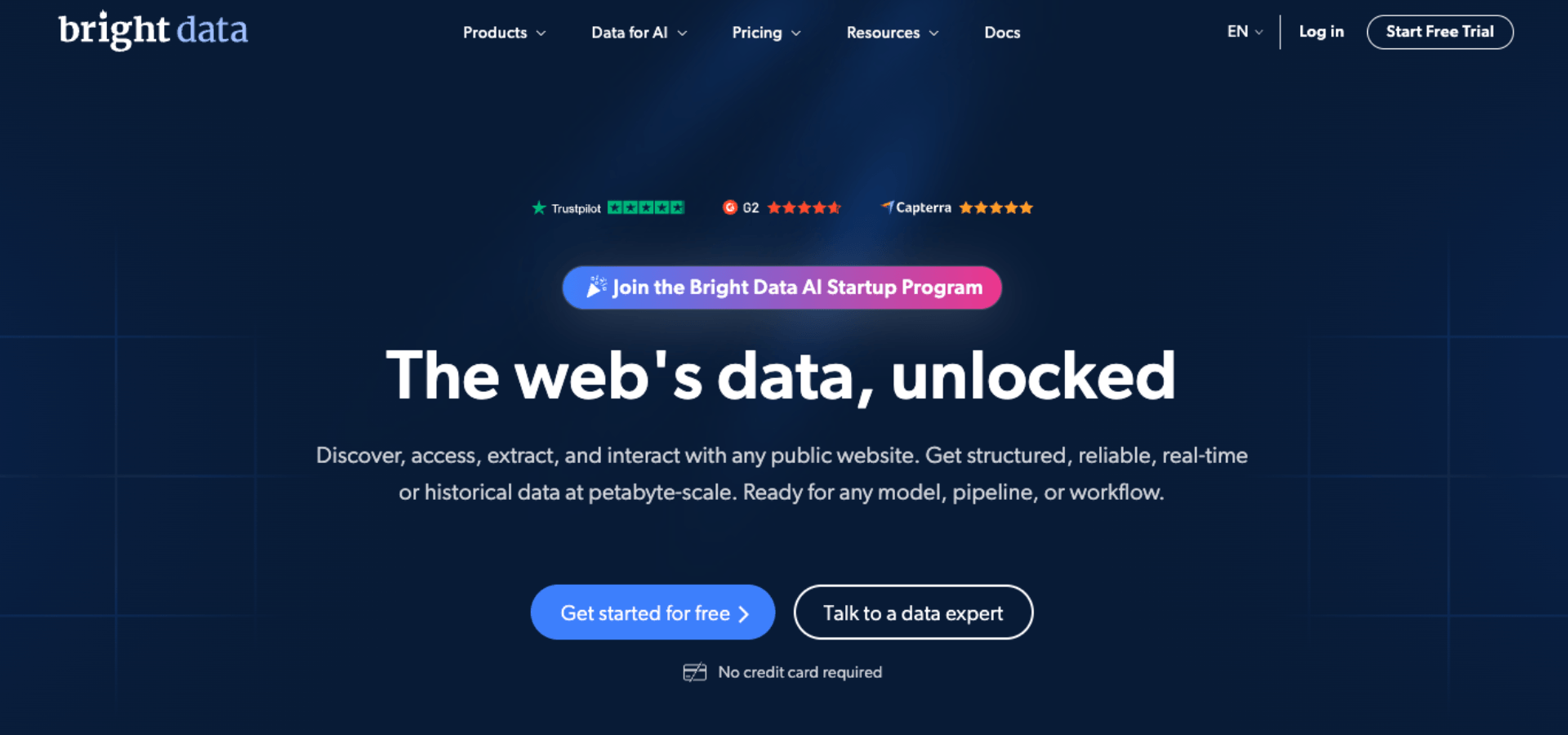
Bright Data provides web data infrastructure for research, retrieval, and agentic workflows rather than a traditional static dataset provider. Its tools, including Deep Lookup and Websets, allow users to search for companies, professionals, and other entities using natural language queries – with Deep Lookup handling the research and Websets delivering the structured, machine-readable output.
The platform is especially useful for large-scale web research, entity discovery, and AI-powered enrichment workflows where teams need to answer complex business questions without building their own scraping infrastructure. Bright Data also provides APIs and tools for web search, SERP retrieval, and AI agent data collection workflows.
Crustdata: company and people data for AI-driven workflows
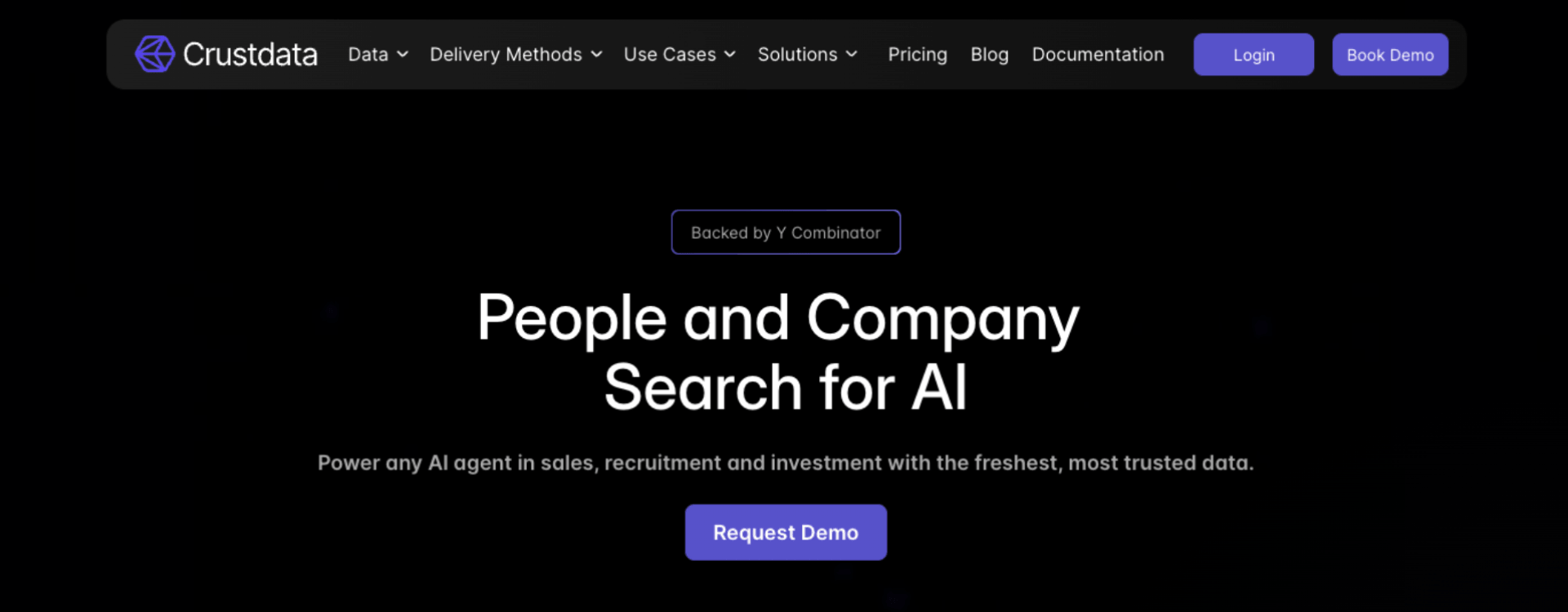
Crustdata provides company and people data infrastructure for AI-driven sales, recruiting, investment, and research workflows. Its APIs and datasets focus on business signals such as hiring activity, headcount growth, funding events, employee movement, web traffic changes, and organizational updates collected from public web sources.
The platform is designed for AI agents and internal automation systems that need live company and professional context for anything ranging from prospecting to market intelligence. Crustdata also supports real-time retrieval and change monitoring through its Watcher API, which tracks job changes, funding rounds, headcount shifts, and other business events across companies and people.
Explorium: unified B2B data layer and MCP for GTM agents
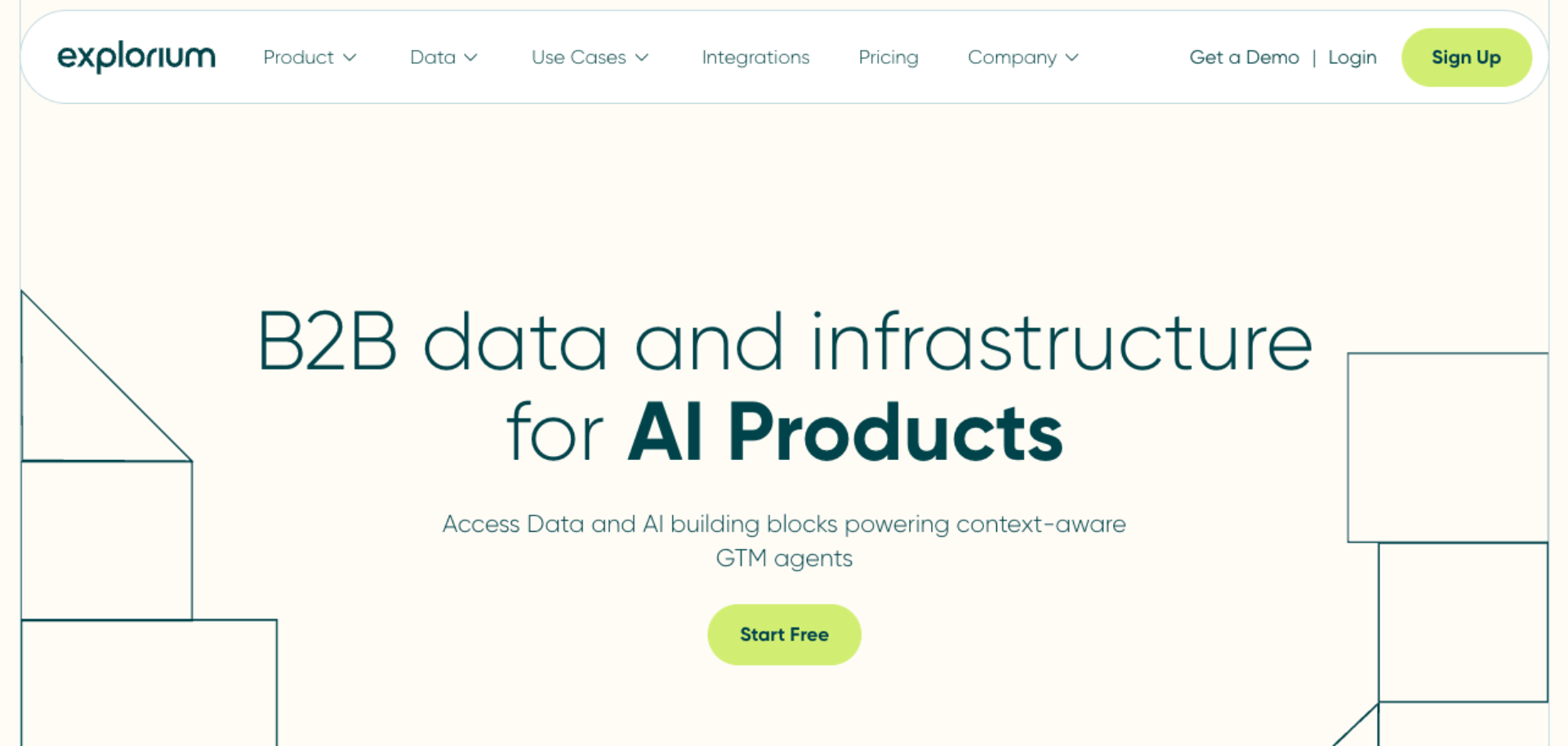
Explorium provides B2B data infrastructure for GTM automation, enrichment, and AI-agent workflows. Its platform combines company, contact, firmographic, and technographic data through a unified API layer designed for sales, marketing, and prospecting use cases.
Following the March 2025 AgentSource launch, the product suite now includes EventAPI, FetchAPI, EnrichAPI, and an MCP Server for agent workflows, covering business entities and employee profiles from 50+ sources. Explorium supports natural language queries, MCP integrations, and agent-oriented workflows for prospecting, account research, lead enrichment, and GTM automation.
Scrapin.io: professional and company profile enrichment API
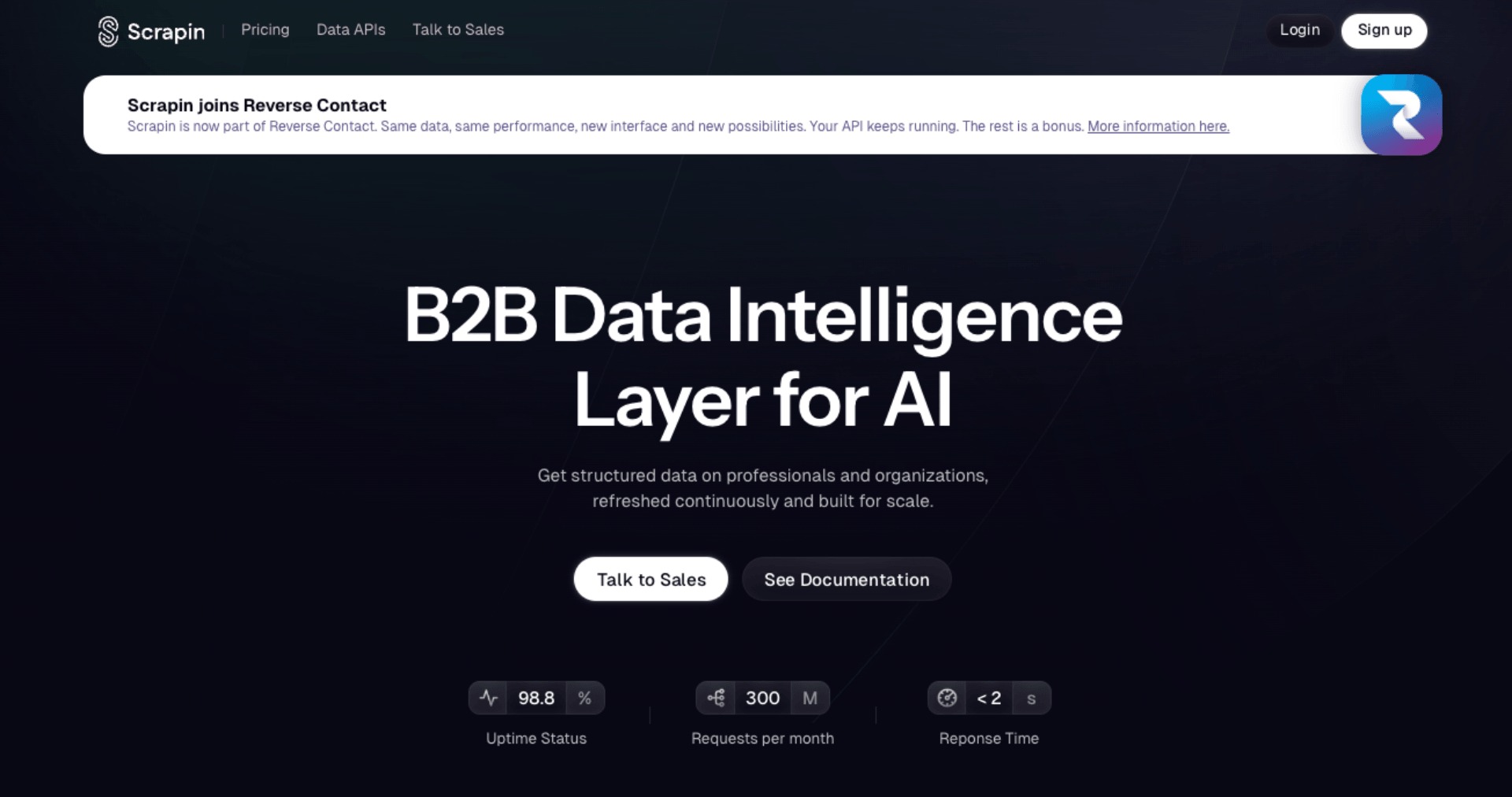
Scrapin.io provides profile and company enrichment APIs for AI products and automation workflows that need structured public professional and business data. The platform is designed for workflows that begin with a known profile URL, company URL, domain, or entity and require additional context such as career history, company information, skills, employee counts, or job-related data.
It is commonly used in recruiting tools, sales intelligence platforms, CRM enrichment, and AI applications that depend on profile-level and company-level enrichment. Scrapin.io offers structured JSON outputs through APIs and supports use cases such as lead enrichment, company research, recruiting snapshots, account mapping, and analytics workflows.
How to choose a reliable data provider for your AI agent?
Choosing the right data provider for AI workflows depends on the agent’s use case, delivery requirements, and business context needs. Beyond dataset size, teams should evaluate how usable, accessible, and operationally reliable the data is for real-world AI and automation workflows. Below is the main criteria you should consider when choosing a reliable AI agent data provider.
Data quality and bias
High-quality AI-ready data helps AI agents make decisions based on accurate, current, and representative business information. Poor data introduces noise and systemic bias, which can lead to flawed outputs, compliance risks, and performance degradation. A good provider will offer transparency into sourcing methods, update cycles, and validation processes.
Scalability and customization
As AI agents evolve, so do their data needs. Your provider should support flexible data delivery methods, formats, and frequency, and provide solutions that are designed to handle increasing data volumes. This ensures the data remains aligned with your models, infrastructure, and growth.
Licensing and compliance
Using non-compliant or improperly licensed data can expose your business to legal and reputational risk. Reliable providers offer clear licensing terms, source only public or authorized data, stay in line with data privacy laws, and follow ethical business practices. This is especially important when handling employee or behavioral data.
Pricing models
When looking for data for AI agents, understanding the provider’s pricing structure helps prevent runaway costs and ensures alignment with your usage patterns. Some use subscription-based plans, while others charge per query, per record, or per dataset. Choose a model that supports scale and experimentation without introducing financial uncertainty.
Common challenges: stale data, fragmented schemas, compliance, integration overhead
Building reliable AI agents depends not only on model quality, but also on the consistency, freshness, and usability of the underlying data infrastructure. Even strong models can produce weak outputs when the data layer contains outdated records, fragmented schemas, or incomplete business context.
Stale or outdated data
AI agents used in sales, recruiting, investment research, or market intelligence often depend on real-time data for AI workflows and current business signals. Outdated company, employee, or jobs data can lead to inaccurate lead scoring, missed hiring signals, incorrect enrichment, or poor recommendations.
Bias and data gaps
Incomplete or unbalanced datasets can affect not only model training, but also retrieval workflows, enrichment, scoring systems, and downstream agent decisions. Overrepresentation of certain industries, regions, or company types may reduce output quality and introduce misleading patterns into AI workflows.
Cost vs. ROI
It’s important to have a method in place to measure the value of the data you’re buying. One of the best ways to ensure you don’t spend too much is to make sure that you use an AI agent data provider that offers flexible and competitive pricing.
Single-source data limitations
Single-source datasets often lack the depth and context needed for reliable B2B reasoning. Company, employee, and jobs data collected from only one platform may miss hiring activity, workforce changes, technographic signals, or organizational context that appear across other public sources. Multi-source datasets help reduce these blind spots and improve overall coverage.
Data quality and integration
AI-ready data needs to be structured, normalized, deduplicated, and easy to integrate into existing systems. Inconsistent schemas, outdated records, and fragmented entity naming can slow down model deployment and enrichment workflows. Compatibility with APIs, MCP servers, and automation pipelines also becomes increasingly important as AI agents move into production environments.
Final thoughts on AI-ready data sources
To build effective AI agents in 2026, organizations need more than just access to raw data. They need AI-ready data infrastructure that supports model training, enrichment, retrieval, reasoning, and real-time decision-making across production workflows.
The right provider depends on the agent’s use case, whether it supports prospecting, recruiting, market intelligence, investment research, enrichment, or deep research AI workflows. Alongside data quality and historical depth, teams increasingly evaluate providers based on API flexibility, real-time access, MCP support, semantic and natural language search, and integration readiness for agentic systems.
Coresignal provides AI-ready company, employee, and jobs data through bulk datasets, real-time APIs, Agentic Search API, and MCP-compatible workflows. Its multi-source, machine-readable data infrastructure is designed to support AI agents that rely on structured business context, historical visibility, and live retrieval across B2B workflows.