


Coresignal vs Bright Data
Coresignal delivers structured B2B company, employee, and job data via ready-to-use datasets and APIs, while Bright Data offers broader web data, APIs, and scraping infrastructure. We compared Coresignal and Bright Data across 21 criteria, including coverage, real-time access, APIs, and data quality.
Looking for a Bright Data alternative?


Data coverage and access
Both providers cover company, employee, and job data, but their features are structured differently.

|

|
|
|---|---|---|
| Company profiles | 72M+ | 30M+ |
| Employee profiles | 915M+ | 674M+ |
| Job postings | 486M+ | 126M+ |
| Data formats |
|
|
| Delivery methods |
|
|
Data processing and quality
Both providers prepare B2B data for delivery, but Coresignal puts particular emphasis on multi-source data processing. Its data is normalized, standardized, and matched through entity recognition, with enriched and analytical fields added to make company, employee, and job data easier to use.
|
|
|
|
|---|---|---|
| Aggregated multi-source data | Yes | Yes |
| Real-time data | Yes | Yes |
| Entity recognition | Yes | Unspecified |
| AI-enriched data | Yes | Unspecified |
| In-line with GDPR/CCPA | Yes | Yes |
Real-time data access and freshness
Coresignal provides real-time API access to company, employee, and jobs data, with databases continuously refreshed. Bright Data also supports fresh and real-time data access, though refresh frequency varies by product and collection method.
|
|
|
|
|---|---|---|
| Real-time data | Yes – real-time database API access | Yes – via Scraper APIs for live collection |
| Average API response time | 176ms | Not published for data products; <1s cited for SERP API |
| Data refresh frequency | Real-time database updates; dataset refreshes vary by dataset | One-time or scheduled daily, weekly, monthly, quarterly, or bi-annually |
API solutions
Both providers offer company, employee, and jobs APIs, self-service access, and developer resources. Bright Data provides B2B APIs within a broader web data and scraping platform, while Coresignal focuses specifically on structured company, employee, and jobs data.
|
|
|
|
|---|---|---|
| B2B data APIs (Company, Employee, Jobs) | Yes | Yes |
| Self-service dashboard | Yes | Yes |
| Data change webhooks | Yes – changes in employee profiles | Yes - job completion only; no entity-level change events |
| Free trial | Yes | Yes |
AI-ready data and agent capabilities
Both providers build for agents now. The difference is what lands in the context window: raw content to interpret, or resolved entities already merged across sources.
|
|
|
|
|---|---|---|
| Natural language & semantic search | Yes – AI Data Search | Yes – Deep Lookup |
| MCP server | Yes | Yes |
| AI-ready structured data | Yes – JSONL and Parquet output | Yes – structured output from live collection |
| Entity resolution | Yes – records merged into single verified profiles | Unspecified |
The comparison provided here is based on public data available as of September, 2026. All users should verify the current status of products, services, or offerings before relying on any comparative information.
Key differences between Coresignal and Bright Data
While similar in many ways, Coresignal and Bright Data have some notable differences.

Product focus: B2B data vs. broader web data collection
Bright Data is a broad web data platform combining proxies, scrapers, and collection infrastructure for many use cases. Coresignal focuses specifically on ready-to-use company, employee, and jobs data that is already collected, cleaned, and resolved.
For teams that need web collection infrastructure, Bright Data offers wider flexibility. For teams that only need structured B2B data, Coresignal provides a more specialized path without maintaining scraping pipelines.

Freshness infrastructure: real-time data vs scheduled refreshes
Coresignal provides real-time API access to continuously updated company, employee, and jobs data, with webhooks for record changes.
Bright Data also supports real-time collection, but freshness depends on the product: on-demand scraping returns newly collected data, while pre-built datasets refresh on a selected schedule.

AI workflows: structured B2B context vs. live web access
Coresignal lets users search company, employee, and job data in plain language and gives AI agents access to the same structured B2B data through MCP. Bright Data’s AI tools are broader, helping agents search, scrape, and interact with the live web.
For workflows that need structured B2B context rather than general web content, Coresignal offers a more direct fit.
Why choose Coresignal over Bright Data?
B2B data specialization
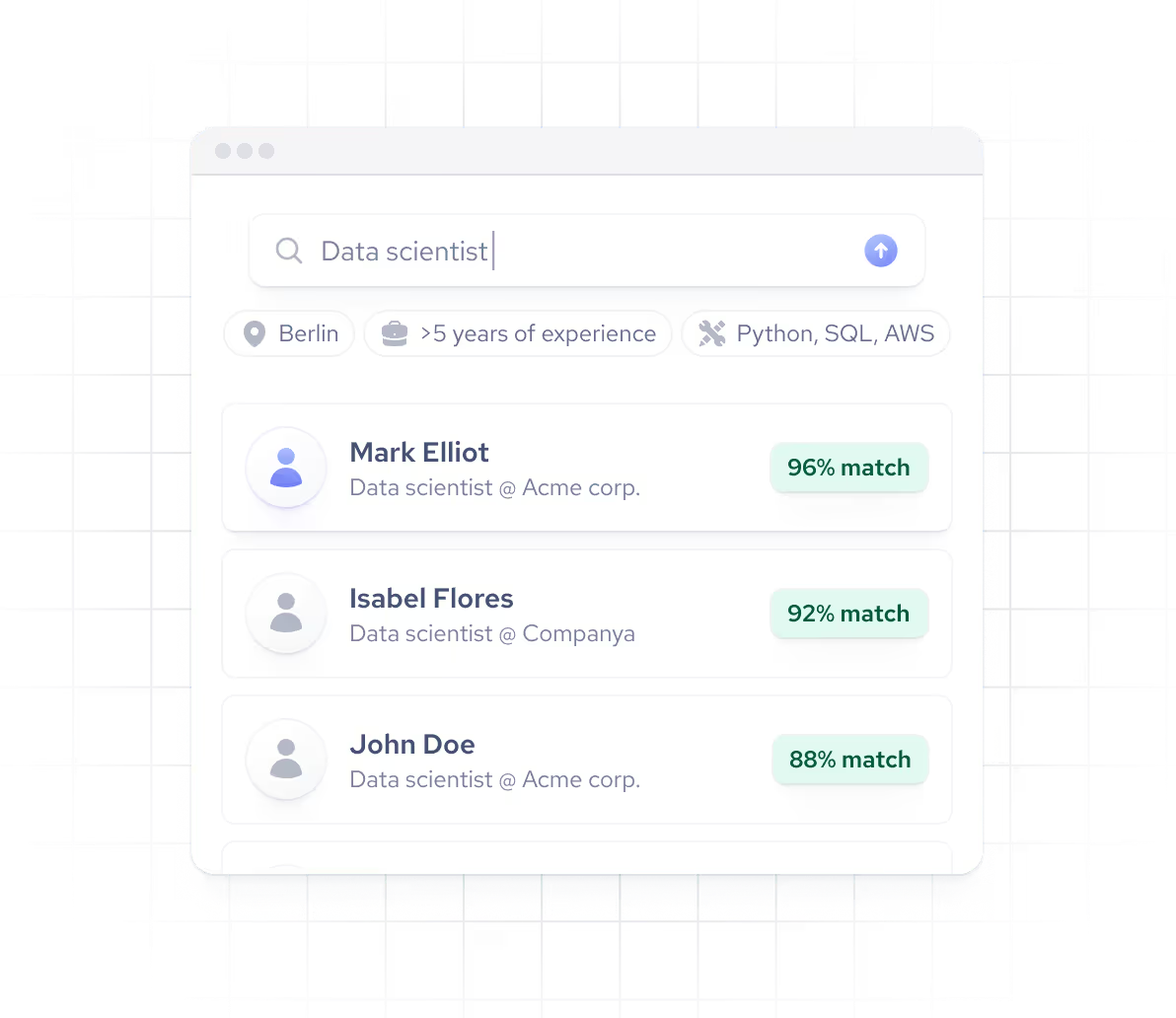
Coresignal is purpose-built for structured company, employee, and jobs data. It suits business intelligence, workforce analysis, and hiring workflows rather than a general web collection platform you configure yourself.
Real-time B2B data access
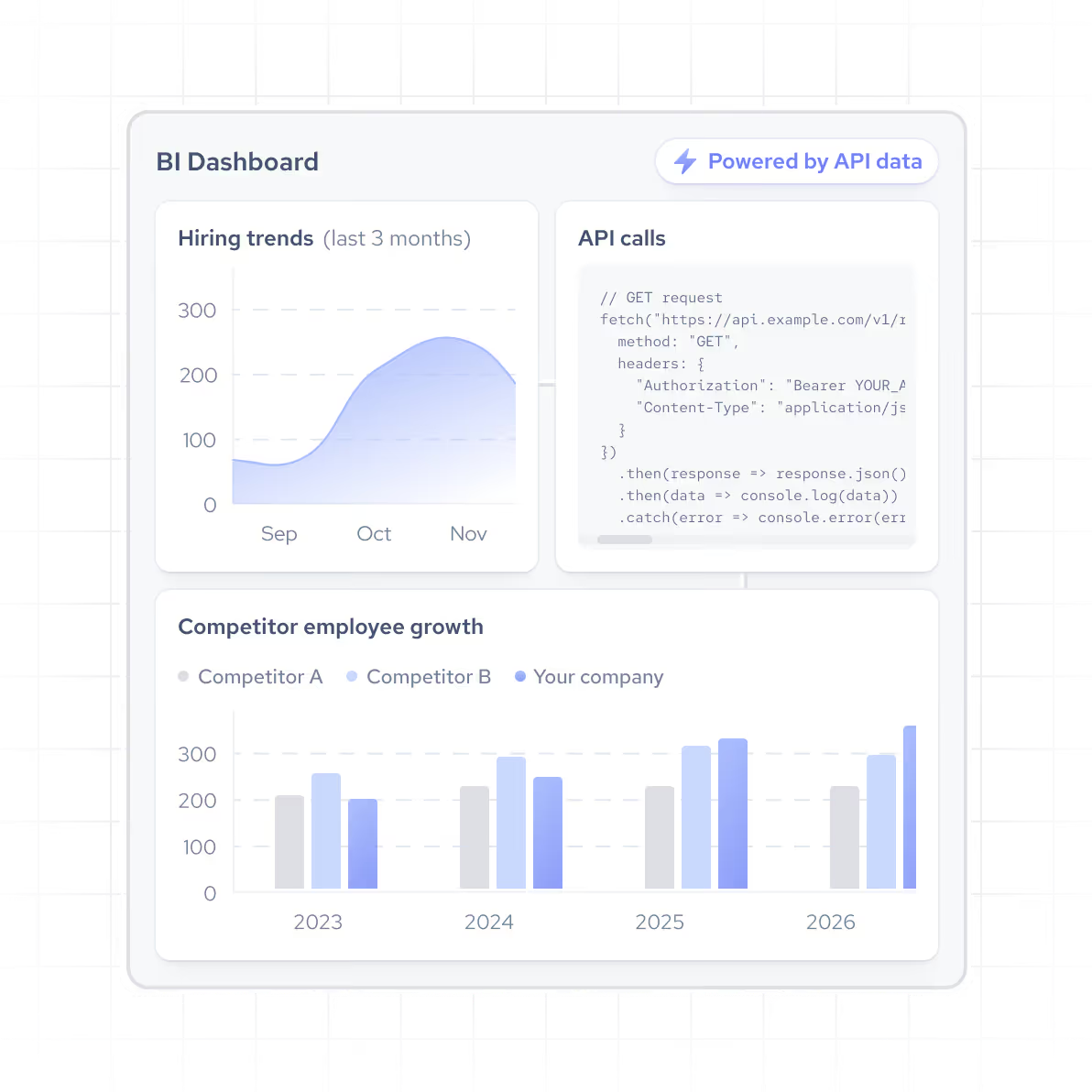
A 176ms API response time and continuous database updates support workflows that depend on current company, workforce, and hiring information.
AI-ready access to structured B2B data
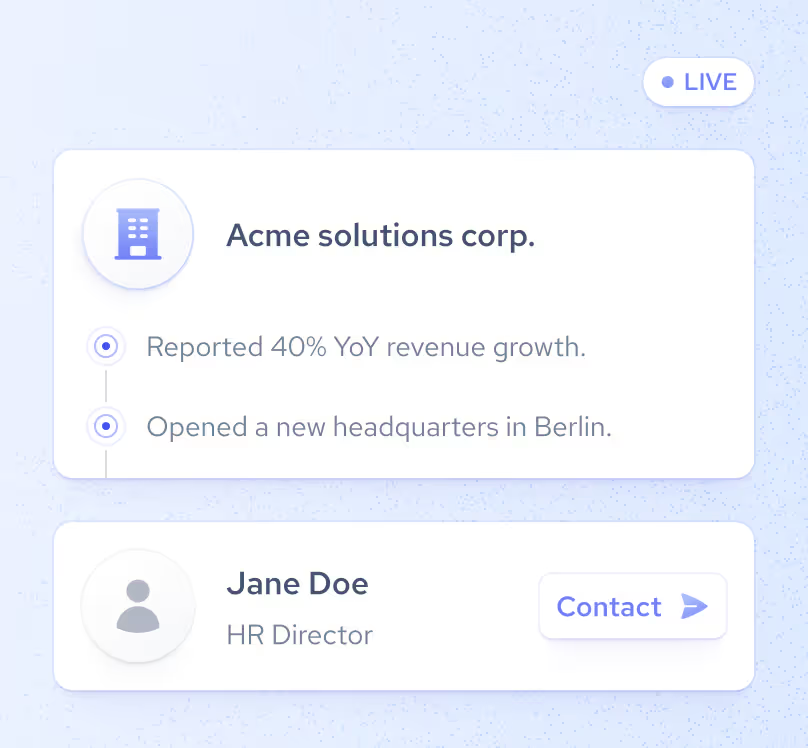
AI data search lets your team query company, employee, and jobs records in plain language. The MCP server gives AI agents the same access. No query language, no schema to learn.
Self-service pricing from $49/month
Start with a 7-day free trial, then scale depending on further data needs.
Looking for Bright Data alternative?
Let's arrange a time for a quick call and discuss your use case.


Coresignal's data solutions

Dataset
Build innovative solutions using comprehensive company data or leverage it for in-depth analysis and unique business insights. Request a data sample or explore on your own using the self-service platform.

Database API
Search and enrich in real time with direct access to a large-scale database. After trying APIs with free credits, select from multiple subscription plans suitable for businesses of any size.
How to select a reliable data provider?
Coverage and freshness
Data record count represent the technical capabilities of the data vendor. However, data freshness is just as important. Providing real-time data requires and experienced team that can develop the necessary infrastructure and processes.
Communication
A reliable data provider will give you all the relevant information about data quality, fill rates, data structure, and features mentioned above before and after you purchase. At Coresignal, clients are supported by dedicated account managers and get prompt technical support.

Resources for testing
It's essential to test and see if the data you’re getting from the provider meets your business needs and expectations. We encourage you to share what information is needed to properly evaluate our datasets or APIs.