


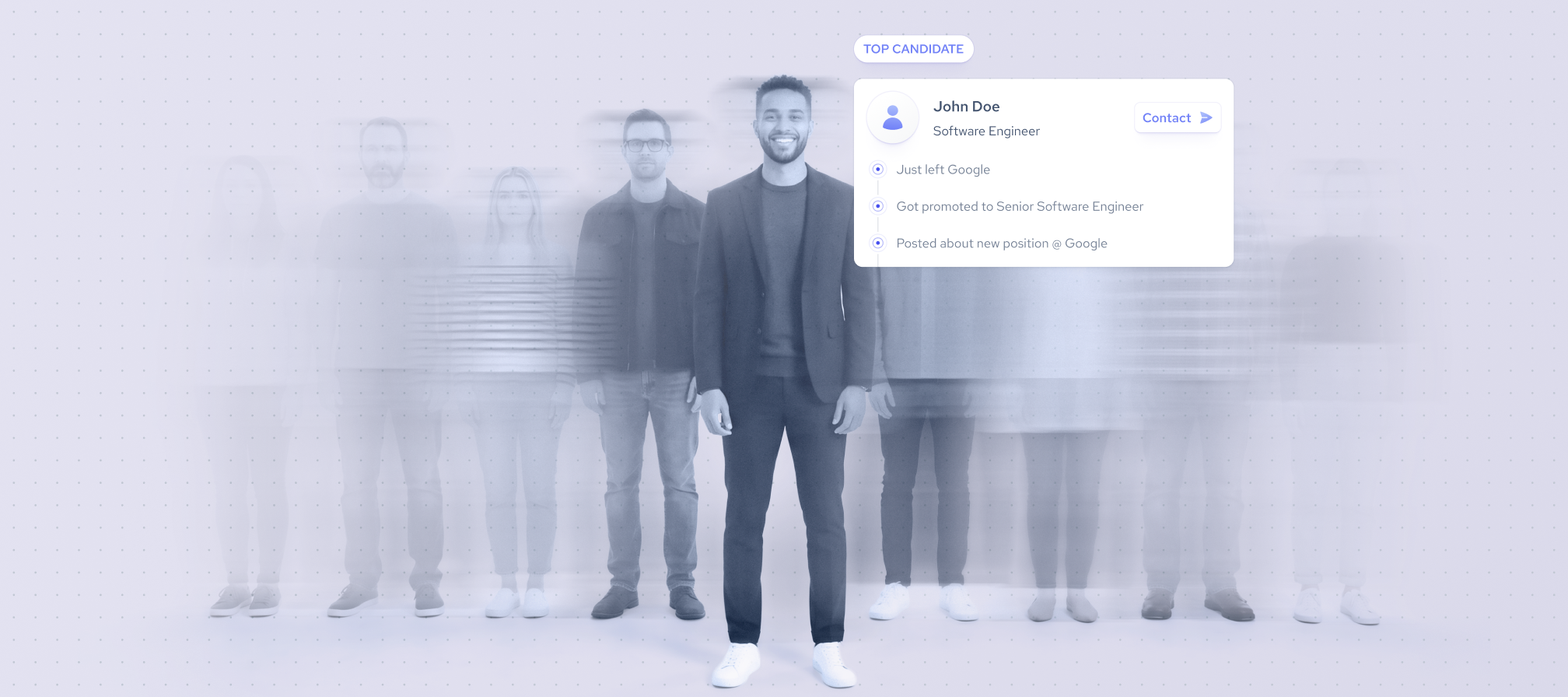
AI in recruiting can be used to automate some of the manual and repetitive tasks that consume a great deal of recruiters' time. It helps allocate more resources to the parts of the hiring process that cannot be done without human interaction.
In this article, you will learn about the benefits, challenges, and AI recruiting tools that can streamline the talent acquisition process.
What is AI recruiting?
AI recruiting is the use of artificial intelligence technologies to automate, augment, and optimize recruiting workflows. AI in recruitment helps organizations streamline tasks such as candidate sourcing, resume screening, interview scheduling, talent matching, and hiring analytics.
Modern AI recruiting solutions range from standalone tools that automate repetitive tasks to AI agents and talent intelligence platforms that support end-to-end recruiting processes. These systems analyze large volumes of employee, company, candidate, and job market data to help recruiters identify qualified talent faster and make more informed hiring decisions.
How is AI used in recruitment?
- Screening candidates. AI recruiting tools can analyze resumes, identify relevant skills and experience, and help recruiters prioritize qualified candidates more efficiently. Conversational AI assistants can also answer candidate questions and guide applicants through the hiring process.
- Background verification. AI can help streamline verification processes by identifying inconsistencies in candidate information and assisting recruiters with document review and risk assessment.
- Interview support. AI in recruitment can assist with interview scheduling, transcription, note-taking, and summarizing candidate responses to support more structured evaluations.
- Talent sourcing. AI for recruiting can search large talent datasets to identify candidates whose skills, experience, and career paths align with hiring requirements.
- AI agents for recruiting. AI agents can automate sourcing workflows by discovering candidates, enriching profiles, generating outreach messages, and surfacing talent insights for recruiters.
- Scheduling interviews. AI recruiting software can coordinate calendars, suggest suitable meeting times, and reduce administrative work associated with interview scheduling.
- Talent rediscovery. AI-powered recruiting platforms can analyze applicant tracking systems to identify previous candidates who may be a strong fit for newly opened roles.
- Referrals. AI can help organizations maximize employee referral programs by identifying potential candidates through existing professional networks.
- Internal hiring. AI tools can match employees' skills and qualifications with internal opportunities, supporting workforce mobility and talent retention.
The effectiveness of AI recruiting solutions depends heavily on the quality and freshness of the underlying data. Organizations building recruiting AI systems increasingly rely on employee, company, and job posting data to improve candidate discovery and talent intelligence capabilities.
For businesses developing talent-sourcing solutions or HR platforms expanding their talent pools, Coresignal's employee data can support AI-powered recruiting workflows with regularly refreshed workforce intelligence. This enables more effective candidate sourcing based on factors such as experience, location, education, and other relevant criteria.
The benefits of artificial intelligence in recruiting
The benefits of AI recruiting extend far beyond simple automation. Modern AI recruiting solutions help organizations source talent more effectively, uncover workforce insights, streamline repetitive tasks, and enable recruiters to focus on high-value activities that require human judgment.
Below are some of the main advantages of using AI in recruitment.
Reduced workload for hiring managers and recruiters
At its core, AI recruiting software allows for automating tedious tasks that don't necessarily require human interaction.
Consequently, recruiters, talent acquisition professionals, and hiring managers no longer need to spend time scheduling interviews, searching for qualified candidates, and manually screening resumes.
Instead, they can focus their attention on parts of the recruiting processes that cannot be effectively covered by AI, such as doing the interviews and interacting with other people that are involved in the recruitment processes.
Improved talent acquisition process
AI recruiting software can search multiple candidate sources and speed up the overall talent sourcing process significantly.
Furthermore, it can create separate pools of candidates that would help the recruiting teams find talent and fill future open positions more quickly and efficiently.
Enhanced candidate experience
AI technology, such as live chatbots can help job seekers to get answers to relevant questions and decide whether the open position is a good fit for them.
It promotes enhanced candidate experience and HR teams no longer need to explain the basics to the potential employee since they have already familiarized themselves with the answers provided by the chatbot.
Minimized hiring bias
Generally, AI tools are built to be objective and avoid bias due to gender, race, or age. It can reduce hiring bias by selecting candidates based on qualifications and experience.
However, with time, it might develop conscious or unconscious bias and favor candidates with certain qualities or characteristics that proved to be successful before. I will cover some examples in the next section.
Improved quality of hire
Since AI recruiting technology can sift through multiple sources and databases, it can select the best candidates and improve the quality of hire.
It provides more flexibility and scope than manual search and finds suitable candidates faster than recruitment teams.
Challenges and risks of AI in recruitment
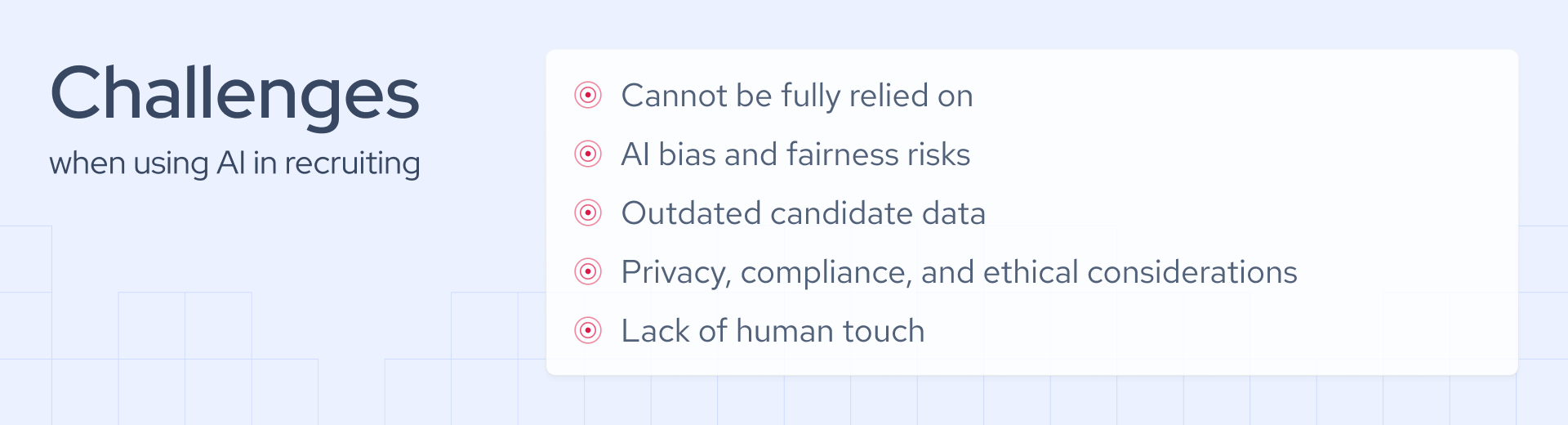
The benefits of AI recruiting are obvious, but it's equally important to understand its limitations and potential challenges. While AI in recruitment can improve efficiency and support decision-making, organizations should implement these technologies thoughtfully and maintain appropriate human oversight.
- Recruiting cannot be fully automated. AI recruiting tools can automate repetitive tasks such as sourcing, screening, and scheduling, but human recruiters remain essential for relationship building, assessing nuanced qualifications, making final hiring decisions, and ensuring a positive candidate experience.
- AI bias and fairness risks. AI systems may inherit biases present in historical hiring data or training datasets. Organizations using AI for recruiting should regularly monitor outcomes, evaluate models for fairness, and ensure that hiring decisions are not based solely on automated recommendations.
- Data quality and outdated information. The effectiveness of AI recruiting solutions depends heavily on the quality of the underlying data. Incomplete candidate profiles, outdated employment information, or inaccurate records can negatively impact sourcing efforts and candidate matching.
- Privacy, compliance, and ethical considerations. Organizations using AI in recruitment must consider applicable privacy regulations, transparency requirements, and ethical guidelines when collecting, processing, and analyzing candidate information.
- Lack of context in candidate evaluation. While AI can identify patterns across large datasets, it may struggle to assess qualities such as adaptability, motivation, interpersonal skills, and other contextual factors that often influence hiring decisions. Human judgment remains critical for evaluating these attributes.
AI recruiting tools and solutions to consider in 2026
The AI recruiting market has expanded significantly in recent years. Rather than looking for a single "best" solution, organizations should identify which type of technology aligns with their recruiting workflows, existing systems, and long-term hiring goals.
The best AI recruiting solution depends on the workflow you want to improve, the data you already have, and whether you need an end-user platform or a data layer for your own HR tech product.
AI recruiting platforms
AI recruiting platforms are suitable for organizations looking for a single solution to support and automate multiple recruiting workflows. These platforms often integrate with applicant tracking systems and may include candidate screening, outreach, scheduling, assessments, and communication capabilities.
However, they may not be the best choice for organizations building their own HR technology products that only require access to underlying recruiting data.
Examples of AI recruiting platforms include:
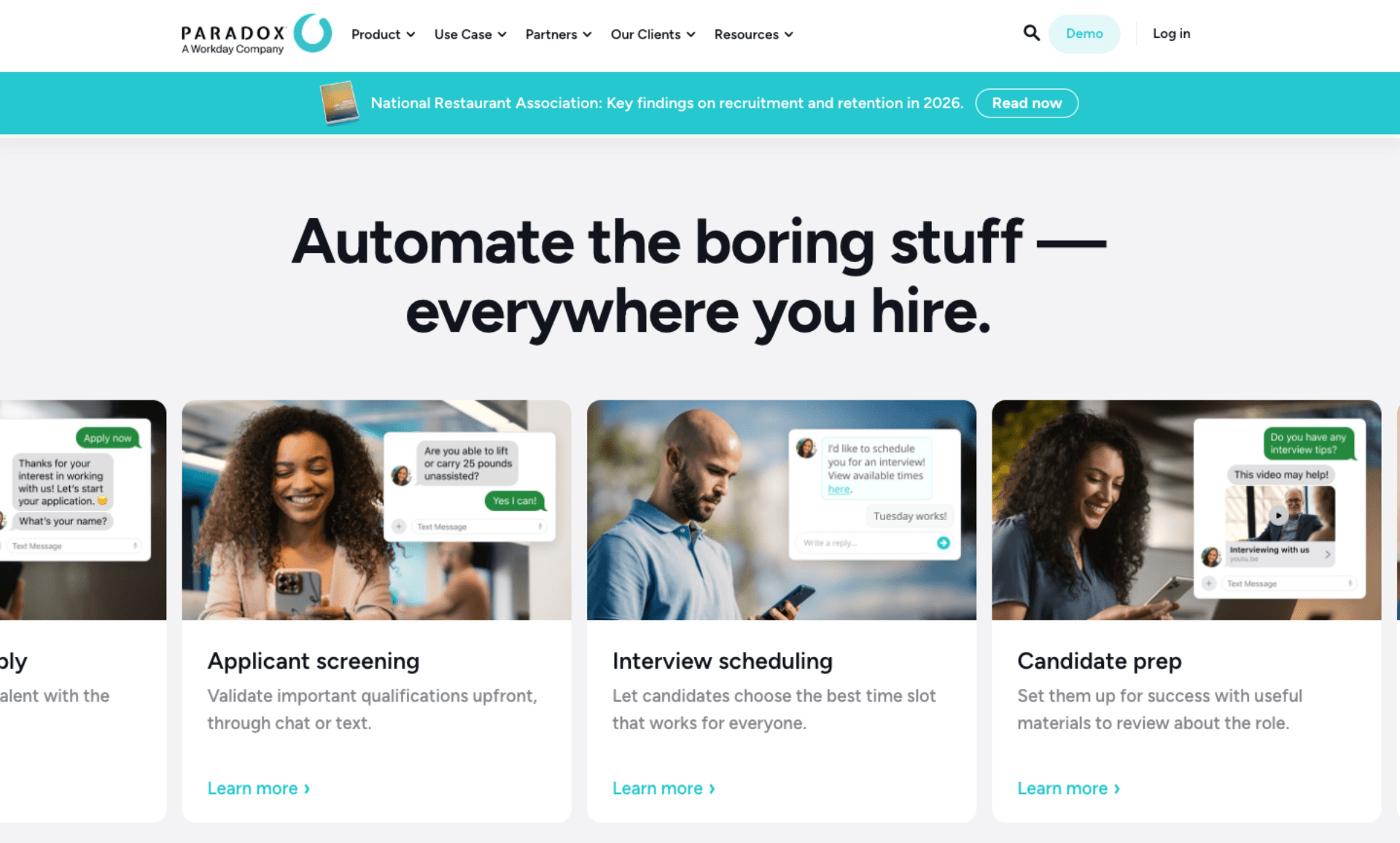
- Paradox – conversational recruiting platform focused on candidate experience and interview scheduling
- Eightfold AI – talent intelligence platform supporting recruiting, internal mobility, and workforce planning
- Phenom – AI-powered talent experience platform with recruiting automation capabilities
- Beamery – talent lifecycle management platform with AI-driven talent intelligence features
AI sourcing tools
This category focuses on candidate discovery, passive talent sourcing, profile matching, candidate ranking, and talent pool building. Newer AI sourcing tools increasingly support semantic search capabilities that help recruiters identify candidates based on skills, experience, seniority, and career trajectories rather than relying solely on keyword matching.
Common capabilities include:
- Candidate discovery and passive candidate sourcing
- Boolean and semantic search
- AI-powered candidate matching and ranking
- Profile enrichment
- Talent pool expansion
The effectiveness of these tools often depends on access to fresh and comprehensive employee data.
Examples include:
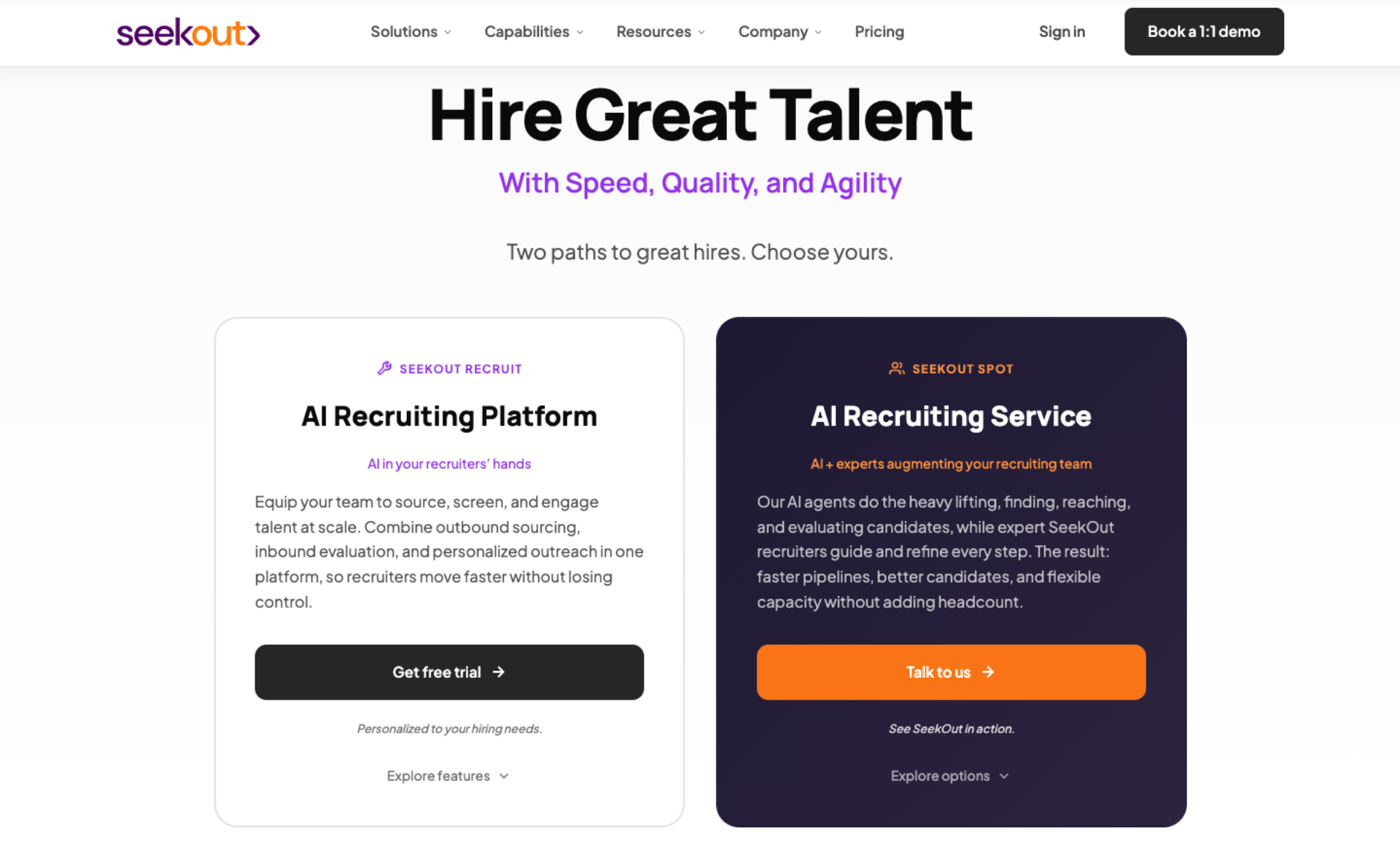
- SeekOut – talent search and sourcing platform
- hireEZ – AI sourcing and outbound recruiting platform
- Findem – talent sourcing platform using candidate attributes and AI-powered search
- Juicebox (PeopleGPT) – AI-native people search platform
AI interview and assessment tools
These tools support candidate screening through video interviews, skills assessments, structured interview processes, and candidate evaluation frameworks. While they can improve consistency and efficiency, organizations should remain mindful of fairness considerations and maintain human oversight throughout hiring decisions.
Common capabilities include:
- Video interviewing
- Skills assessments
- Structured interview support
- Candidate scoring and evaluation
- Interview scheduling
Examples include:
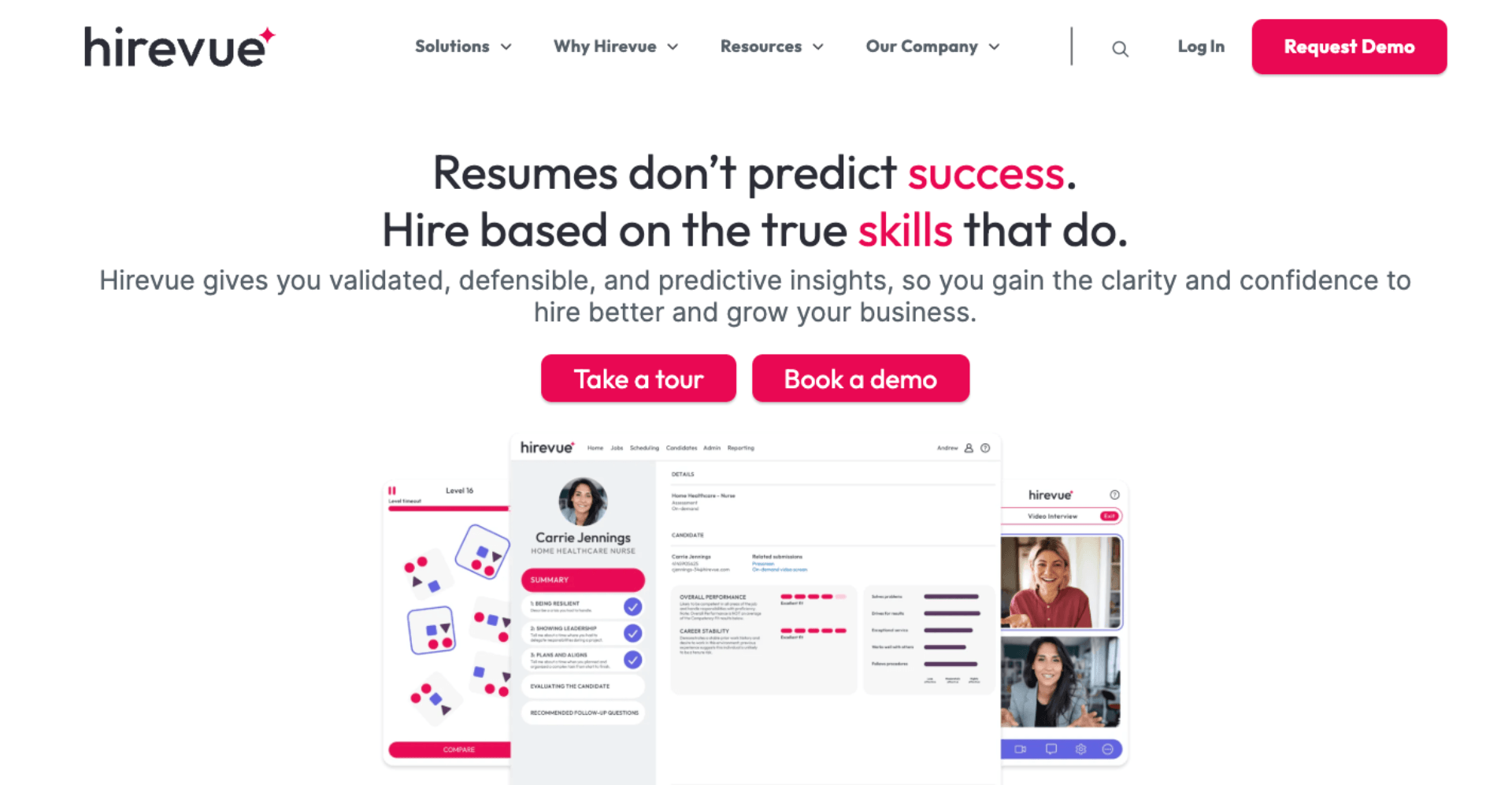
- HireVue – video interviewing and assessment platform
- Humanly – candidate engagement, screening, and scheduling platform
- TestGorilla – skills assessment platform
- Codility – technical skills assessment platform for developer hiring
AI recruiting data providers
Unlike recruiter-facing platforms, recruiting data providers serve as the data layer powering HR technology products, talent intelligence solutions, AI recruiting agents, workforce analytics platforms, and labor market intelligence tools.
These providers typically offer access through datasets and APIs, while newer solutions increasingly support agentic workflows through technologies such as Agentic Search APIs and Model Context Protocol (MCP) integrations.
When evaluating AI recruiting data providers, organizations should consider:
- Data coverage
- Freshness and update frequency
- Data structure and standardization
- Deduplication processes
- Documentation and developer experience
- Compliance practices
Examples include:
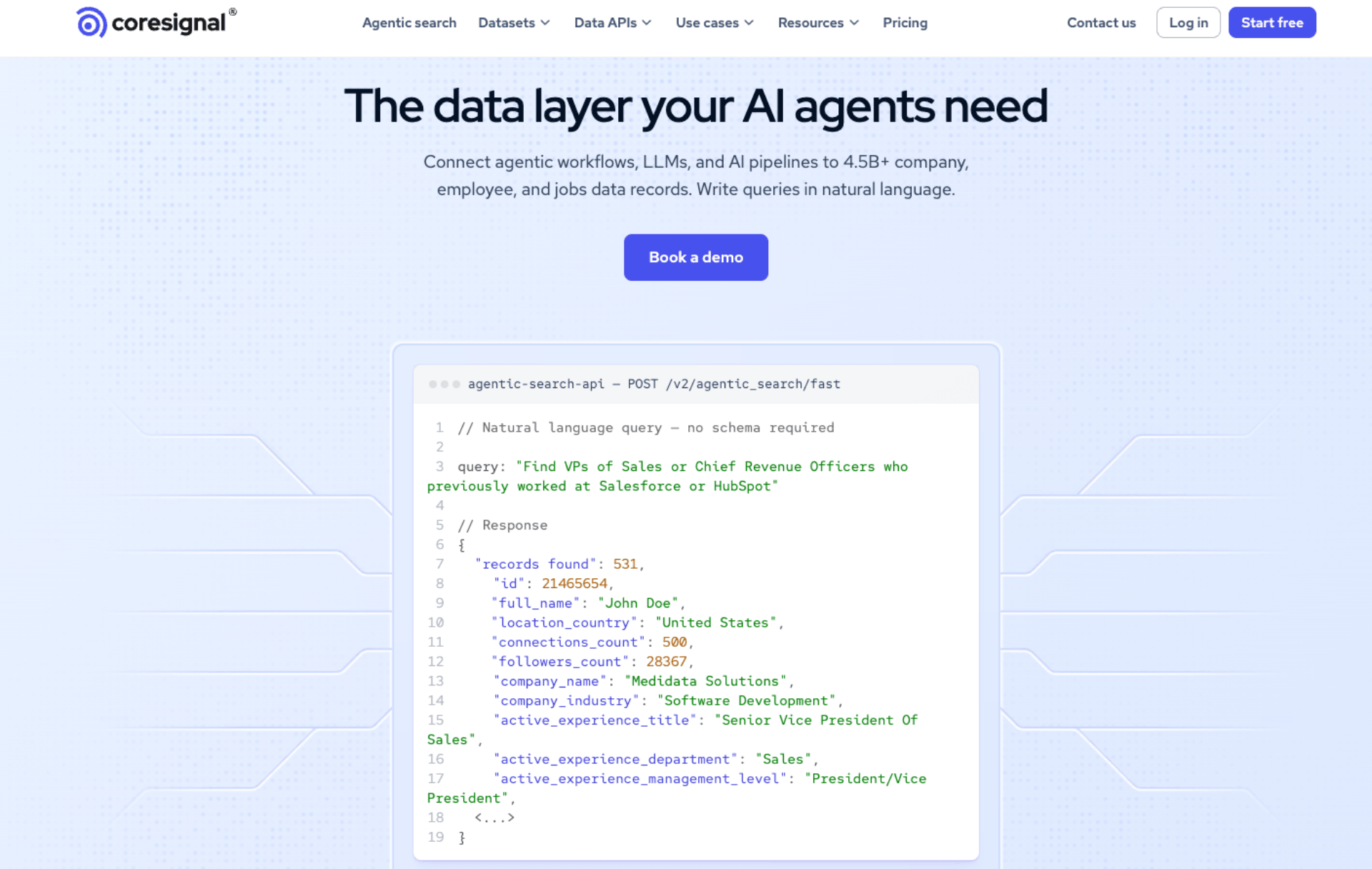
- Coresignal – public web data provider offering employee, company, and job posting data through datasets, APIs, Agentic Search API, and MCP for HR tech, talent intelligence, and AI recruiting applications
- People Data Labs – provider of people and company data APIs
- Bright Data – web data infrastructure and dataset provider
- Lightcast – labor market analytics and skills intelligence provider
It's important to note that providers such as Coresignal are not traditional AI recruiting platforms with recruiter-facing interfaces. Instead, they provide the underlying data infrastructure used to build AI recruiting solutions, talent intelligence products, sourcing tools, and recruiting agents.
Hence, to clarify:
How to choose an AI recruiting tool?
- Establish your hiring needs. Are you a relatively small company that only needs several new employees? Or are you a huge enterprise that is constantly looking to expand your teams? AI recruiting tools vary greatly in price and features, so it's important not to go overboard and pay a premium for a solution that won't be used to its full potential.
- Define the challenges you need to address. Do you find it difficult to source passive candidates? Or maybe you struggle to generate a list of relevant candidates in general? Do you feel like you need recruitment agencies to tackle conscious or unconscious bias? Identifying the challenges you need to address will help you select the tool that fits your business the best.
- Identify the features you want the tool to have. As mentioned before, the tools vary greatly in features. Several tools may have the same feature, but the way it works and connects to your ATS could be different. If you're looking for more sophisticated talent management solutions, a chatbot will most likely not cover it.
- Explore analytics options. The goal of AI recruiting software is to improve your hiring. However, it's hard to keep track of the progress without analytics features. The tool should have some kind of reporting to monitor the effectiveness of the recruiting software.
How is AI changing talent sourcing and recruiting?
AI recruiting software enables the automatization of repetitive tasks and saves a great deal of time in the recruitment process. Companies are able to leverage AI recruiting tools to quickly generate lists of potential candidates compared to manual sourcing.
Talent acquisition teams can focus more attention on the tasks that require human interaction such as interviews and coordination with people involved in the hiring process.
Even though artificial intelligence in recruiting is not perfect, as it can develop bias, it’s possible to fix that by working on the algorithms. Also, it provides companies with more options to choose the best talent.
The role of data in AI recruiting
AI recruiting systems are only as effective as the data they rely on. Access to current workforce information helps organizations improve candidate discovery, talent intelligence, and hiring decisions.
Employee data supports talent sourcing by helping identify potential candidates, enrich profiles, and uncover relevant experience and career patterns. Job posting data provides insights into hiring demand, sought-after skills, and broader labor market trends. Company data adds context around organizational growth, hiring activity, and market positioning.
As AI in recruitment continues to evolve, fresh and structured employee, company, and job posting data are becoming increasingly important for sourcing tools, recruiting agents, and talent intelligence platforms.
How Coresignal data supports AI recruiting workflows
As organizations building AI recruiting solutions often require access to fresh employee, company, and job posting data to support sourcing and talent intelligence workflows, Coresignal can offer exactly that. Coresignal provides public web data through datasets and APIs that can help HR technology platforms expand talent pools, enrich candidate and company profiles, and monitor workforce and hiring trends.
The data can be used to support candidate discovery, identify hiring signals, and provide additional context for recruiting decisions. For organizations developing AI-powered recruiting products, Coresignal also offers capabilities such as Agentic Search API and MCP support, enabling AI agents to interact with workforce data using natural language queries and integrate talent intelligence into recruiting workflows.
Summary
AI recruiting is becoming more data-driven, with organizations using AI to improve sourcing, streamline workflows, and support hiring decisions. As AI in recruitment evolves, access to fresh employee, company, and job posting data is increasingly important for effective talent intelligence and candidate discovery.
However, AI recruiting solutions are designed to augment recruiters, not replace them. Human judgment remains essential for candidate evaluation, relationship building, and final hiring decisions.


