



.webp)
Looking to connect with alumni from a specific university or former employer? Whether you're recruiting, fundraising, or expanding your professional network, knowing how to find alumni efficiently can unlock opportunities that cold outreach rarely does.
Many universities maintain searchable alumni directories, but manual searches don't scale. In this guide, you'll learn the most effective methods for finding university and company alumni, from LinkedIn filters to professional data tools, and how to use those connections strategically for hiring, partnerships, or outreach.
What is an alumni network?
An alumni network is a community of former students or employees connected through shared institutional or corporate experience.
Universities or large companies often maintain these networks. They serve as a trusted ecosystem for reconnecting with former peers, exchanging insights, or uncovering new business opportunities.
Unlike professional networks, alumni communities usually come with a built-in layer of trust through shared history. Whether you studied in the same faculty or worked on the same team, that common ground often translates well in a business context.
How to leverage alumni networks
Alumni networks are not only for sharing nostalgia or staying in touch with former colleagues. Here's how organizations tap into them for practical business and institutional value:
1. Recruiting and rehiring talent
Alumni can be strong candidates because they already understand the institution or company culture, reducing onboarding time and cultural risk. Former employees may also be well suited for boomerang hiring – returning to a previous employer in a more senior or different capacity. For universities, alumni networks expand the candidate sourcing pool with professionals whose academic background is already verified.
2. Generating referrals and business opportunities
Shared educational or professional backgrounds make outreach warmer and more likely to convert. Alumni connections can support introductions, partnerships, sales conversations, and referrals in ways that cold outreach typically cannot, because the shared context creates a natural starting point for trust.
3. Strengthening engagement and brand advocacy
Engaged alumni can act as credible advocates for a company or institution, amplifying initiatives within their own networks, providing honest feedback on products or services, and sharing relevant opportunities. This is particularly valuable in niche industries where reputation and word of mouth carry significant weight.
4. Analyzing career paths and talent movement
Alumni data can reveal where graduates or former employees move next, which industries and employers attract them, and how careers develop over time. These insights can support workforce planning, recruiting strategy, market research, and competitive intelligence, making alumni networks a meaningful source of labor market signal beyond just networking.
How to find alumni of a university
Finding university alumni doesn’t require insider access—it just takes the right tools. Here are the most reliable methods:
1. Use LinkedIn’s alumni search
Start by visiting the university’s official page on LinkedIn. Click “Alumni” in the navigation bar. From there, you can filter by connections, location, company, industry, or keywords. This is especially effective for narrowing down specific profiles, such as “Columbia graduates in product management in San Francisco.”
2. Explore official alumni directories
Many universities host searchable alumni directories on their websites. Some are open-access; others require login credentials. These directories often include career updates, geographic info, and sometimes even contact emails.
3. Check university-run alumni networks
Some institutions run formalized networking platforms. These platforms may include community portals, forums, curated opportunities, and event listings that facilitate direct outreach.
4. Leverage email lists and newsletters
Once you're part of an alumni community, you may gain access to curated job boards, newsletters, or member directories. These resources can surface hidden talent or professional connections not visible on public platforms.
How to find alumni at scale with employee data
Manual alumni searches become impractical when you need to look across multiple universities, companies, or locations and check profiles one by one. At that point, the process requires a more structured approach.
Employee data makes large-scale alumni searches more efficient by organizing education history, employment history, current roles, locations, skills, and other professional information into structured fields that can be filtered at scale, rather than browsed manually.
Coresignal's multi-source employee data combines information from multiple public professional and business-related sources into enriched, continuously updated profiles. The Multi-Source Employee API provides real-time access to this database, allowing users to search for university or company alumni using a wide range of education and employment criteria. This approach can be used to build an alumni database, track the career paths of graduates from a specific institution, source talent with relevant experience, or power alumni-based products – without reviewing profiles one by one.
It is especially valuable for organizations building alumni-based products, conducting market intelligence, or sourcing talent with verified experience at scale.
How to find alumni of a company or university
To find alumni using Coresignal, start by registering for a free account. All new users receive free credits during a 7-day trial period to explore the data.
After signing in, navigate to Employee APIs > Employee Playground in the dashboard.
1. Write your prompt
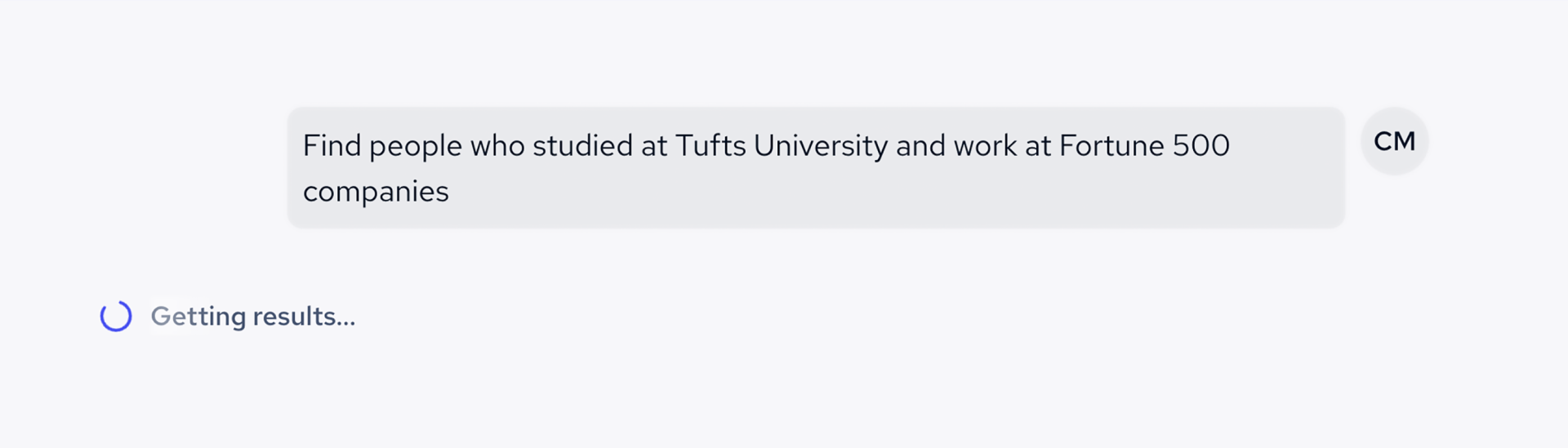
Describe who you are looking for in plain English. Your prompt can be as specific or as broad as you need – the AI Query Builder will interpret it and generate a structured search request. For starters, try:
- Find people who studied at New York University and work in San Francisco
- Find people who studied at Ivy League universities and work in New York City
- Find people who studied at Tufts University and work at Fortune 500 companies
2. Review and adjust your request
Before running the search, you can review the generated query and refine any filters directly in the Search request section.
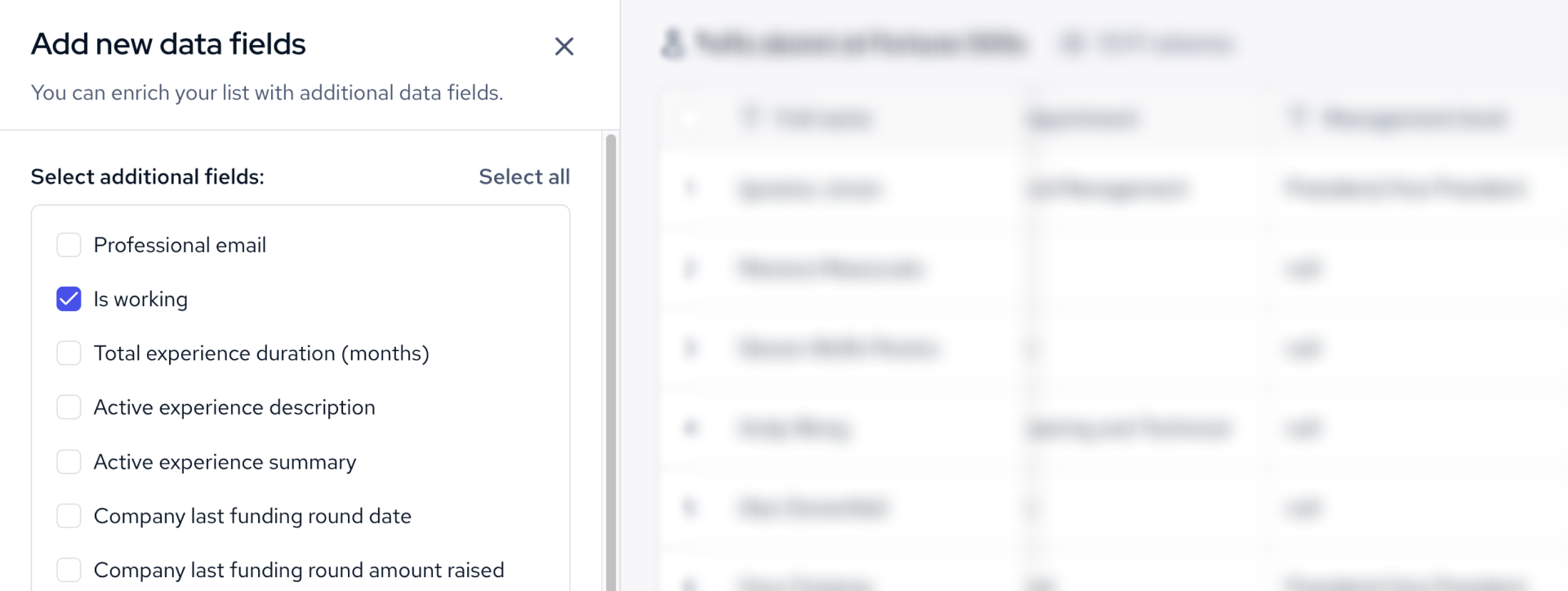
3. Review the results
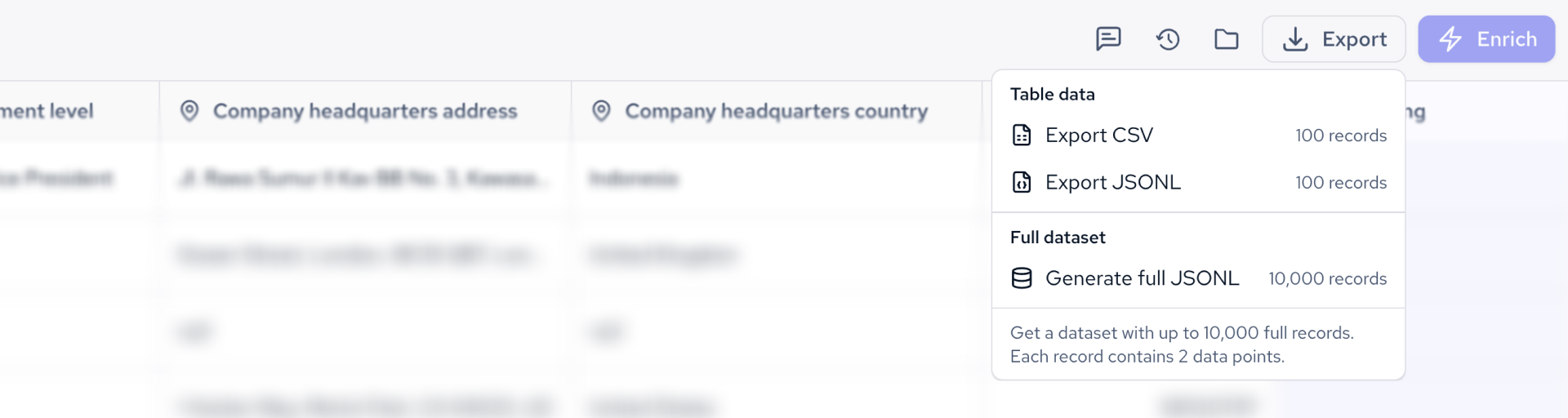
Matching profiles will appear in the results section. Each profile contains detailed information including past experience, education history, current role, skills, and workplace details.
Build an alumni finder AI agent
With billions of company, employee, and job records, Coresignal provides the scale and precision needed to build an effective alumni finder AI agent. Once you have tested and refined your search in the API Playground, you can deploy the workflow at scale using datasets or an API integration.
1. Define the alumni search criteria. Specify whether the agent should search by university, previous employer, graduation period, current company, job title, location, skills, or a combination of these criteria.
2. Connect the agent to professional data. The Agentic Search API allows an AI agent to turn natural-language requests into structured data queries without manual schema mapping – structured alumni profiles returned in a single API call.
3. Retrieve and organize matching alumni profiles. Results are returned as structured records ready for filtering, export, or routing into enrichment and outreach workflows.
4. Keep the alumni database up to date. Coresignal's signals (webhooks) notify your system the moment a tracked profile changes, so the alumni database stays current without manual maintenance.
Summary
Whether you are reconnecting with a handful of former colleagues or building a system that tracks thousands of alumni across industries and geographies, the core challenge is the same: getting accurate, current professional data without spending hours on manual searches.
The methods covered in this guide – from LinkedIn filters and university directories to professional data APIs and AI-powered agents – serve different scales and use cases. For occasional lookups, manual tools are sufficient. For anything larger, structured employee data and purpose-built APIs remove the bottleneck and make the process repeatable.
Alumni connections carry a layer of trust that most professional outreach cannot replicate. The organizations that tap into that effectively – through smarter searches, fresher data, and automated workflows – are the ones that turn alumni networks from a passive resource into an active one.


