"Without data, you're just another person with an opinion." This is a quote by a famous business theorist W. Edwards Deming, that I very much agree with. I've watched businesses make decisions based on gut feeling alone, and I've seen firsthand how much it costs them in the end. But I'd add one thing: data alone doesn't solve these problems unless it's high-quality.
That's why the demand for accurate, scalable, and fresh data has never been higher. More and more organizations are either building internal company databases or turning to external providers to fill the gap. Because when the data is outdated or unreliable, even the best strategy falls apart.
Structured company data is now widely used across analytics, AI model training, sales intelligence, investment research, and market segmentation. It gives decision-makers a reliable foundation for evaluating opportunities, tracking competitors, and spotting emerging consumer trends before they go mainstream.
Understanding what makes a company database good and how to use it effectively can be tricky, though. So in this guide, I'll answer the most common questions I've encountered about company data, covering everything from data sourcing and reliability to real-world use cases and company search capabilities.
If you have more questions or want to discuss data, you can contact our sales team or me personally on LinkedIn.
What is company data?
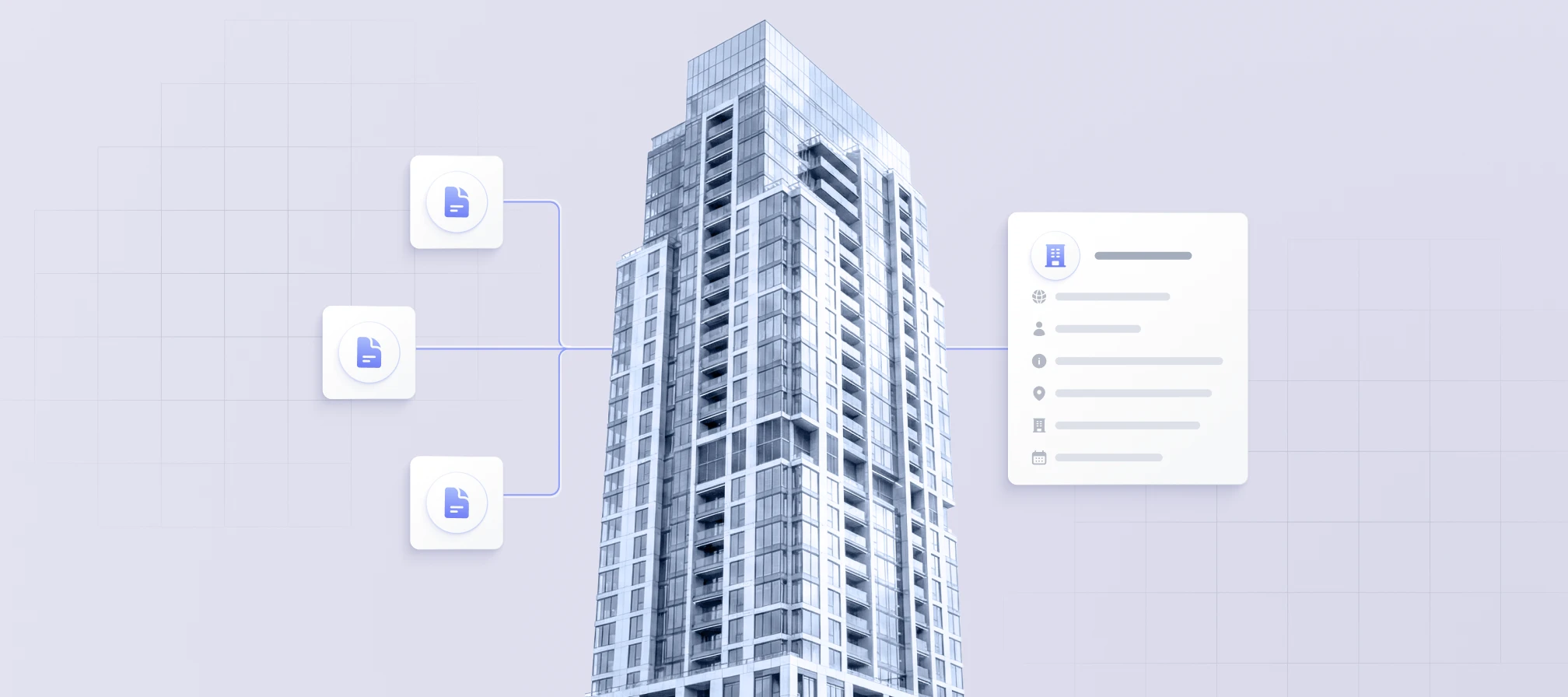
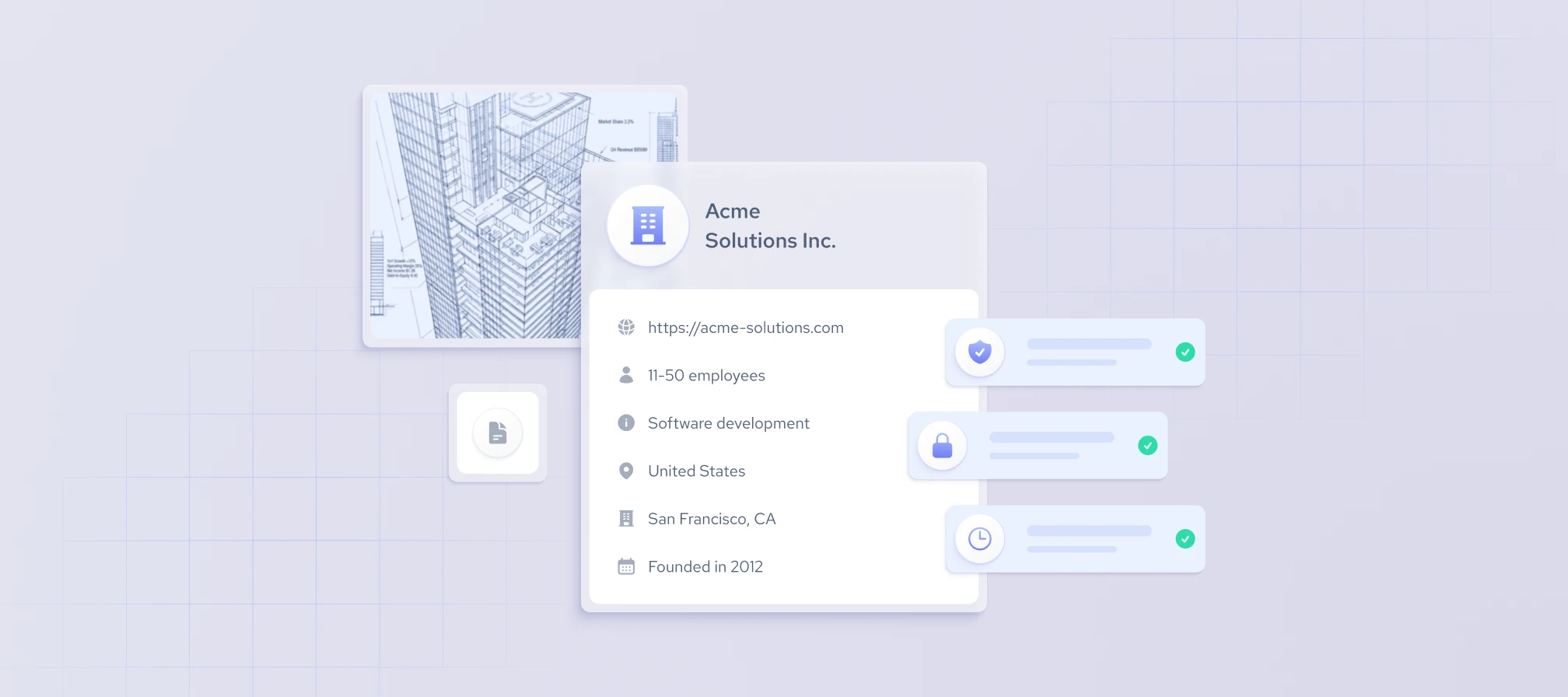
Company data is structured information about a business that closely describes its composition, business landscape, and collaboration patterns. It shows what the firm does, where it’s based, and what technologies it uses.
Multi-source company data is information about companies collected from various sources. After the data is collected from these sources, it is stored in a company database, which must be regularly updated as the business grows and expands its market reach.
There are various types of company data you should be familiar with, but the most important categories are firmographic and technographic data. The former reflects on the main details about a business, from its target niche and industry vertical to its location, size (number of employees), revenue details, and corporate hierarchy. On the flip side, technographic data represents a visualization of the company’s technologies in numbers.
What are the top company data providers in 2026?
While it’s possible to compare top company data providers by freshness, sourcing scale, or historical depth, it’s still your decision to pick a suitable vendor for your needs.
Finding the best company database for accessing global business information should be based on verified, multi-source information and a convenient data delivery platform for easy integration into existing company CRMs.
Having worked with data customers across industries, I'd rather help you find the right solution for your use case than push you toward any particular one. With that in mind, some providers like Coresignal, Bright Data, People Data Labs, Mixrank, and Crustdata stand out from the crowd. Here’s what I think sets them apart from other providers:
What does a comprehensive company database typically include?
A comprehensive database of companies' data usually includes a structured overview of each business, organized by categories. The main categories include:
- Firmographic data: includes company name, industry, revenue, legal entity type, etc;
- Technographic data: explains the company’s technology stack at a glance, including software tools and overall infrastructure;
- Geographic data: provides an overview of the headquarters location, region-based information, and regional offices;
- Growth signals: users can also get informed about signals, such as hiring trends and new office openings.
Most providers offer two options for accessing their data: via an API or as ready-to-use datasets. I really believe this is the right approach because different needs require different methods, and having options is important.
Why is data freshness critical for company databases?
Companies are not static: they change leadership, shift strategies, expand into new markets, get acquired, or shut down, sometimes within months. That means any company data you're working with today could be partially or fully outdated tomorrow. Most companies search for real-time data on their competitors, industry leaders in their niche, and prospective partners, as this is a crucial factor that can make or break a business deal.
Keeping data fresh requires more than just periodic updates. It demands continuous collection, validation, and normalization processes running in the background at all times. Without them, even the most comprehensive database gradually becomes a liability rather than an asset.
At Coresignal, for instance, we provide fresh, real-time data accessible via API or as ready-to-use datasets. That means you're always working with information that reflects the current state of the market, not a snapshot from six months ago.
How to evaluate and benchmark company data quality?
If you need to evaluate the quality of company data, I’d suggest focusing on four key criteria: accuracy, completeness, consistency, and timeliness. That means the data needs to reflect real-time business details, populate essential fields, and represent the company consistently across numerous records in a timely manner.
For example, you can pull records for companies you already know well and verify the core fields: industry classification, employee headcount, revenue range, and domain. Check for duplicate records, which are one of the most common and damaging quality issues. Then look for duplicate records and see how consistently those fields are filled in across the wider dataset. A lot of empty fields or repeated entries is a clear sign that the data hasn't been properly collected or cleaned, and that will create problems down the line.
This is extremely important since inaccurate data might lead to poor sales performance in case of sudden industry movements. Business and marketing analytics could be way off when such information is used as a reference, while trained AI models could end up completely off the mark. That’s why having a checklist like the one I’ve prepared below comes in handy:
What is the difference between a company database and a company dataset?
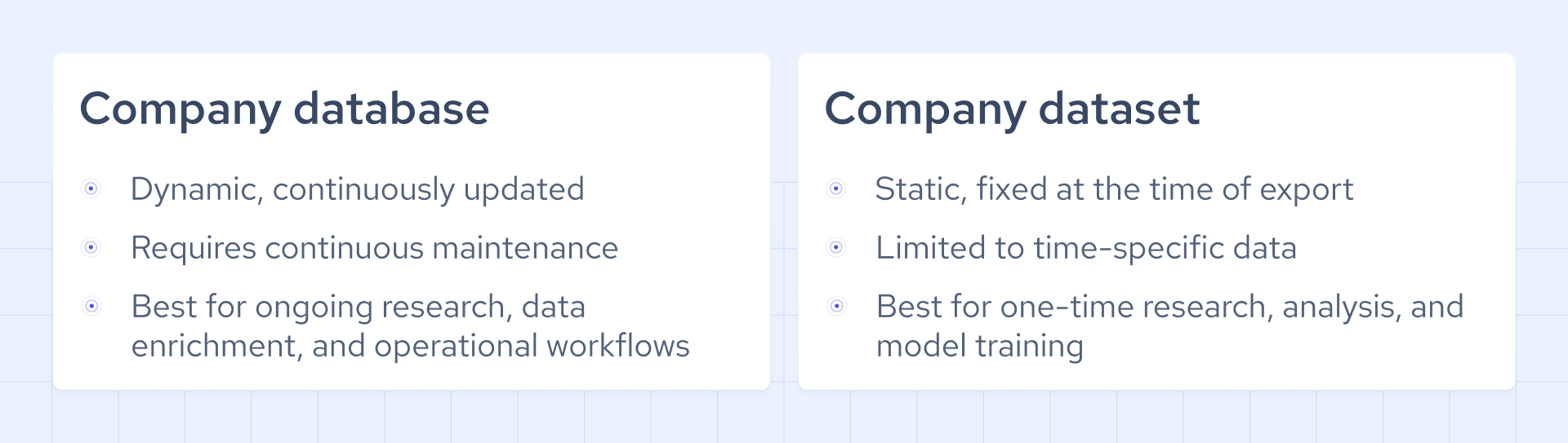
A company database is a regularly updated system that contains structured company data.
On the other hand, a dataset is merely a snapshot of information from the broader database, mainly used for one-time research and analysis or model training. Still, being static, it’s limited to time-specific data.
Databases, on the other hand, are frequently relied on for operational workflows that require a continuous stream of new and updated information. That’s why they are mainly used in ongoing research, data enrichment, and workflows.
Can company data be used to train AI models?
Yes, company data can be used to train AI models, as long as it's structured and up to date. Naturally, it all depends on the need, as the data can be applied to train machine learning models with a variety of applications, from lead scoring to customer research and outreach planning.
In this case, factors like technographic and growth signals come in crucial. Business operatives often require details on the industry, company size, revenue, technology adoption patterns, and hiring patterns to train AI models.
Still, it also comes with certain risks, especially regarding outdated records, missing fields, or sourcing, all of which can affect the reliability of AI outputs.
How to filter and search for companies by industry, size, or location?
Most company databases and APIs let you search and filter companies using a combination of parameters. The most commonly used filters are industry, company size (measured by headcount or revenue range), and location, which can be narrowed down to country, region, or city. Beyond those basics, you can also filter companies by the technologies they use, hiring activity, funding rounds, or growth signals like headcount changes over time.
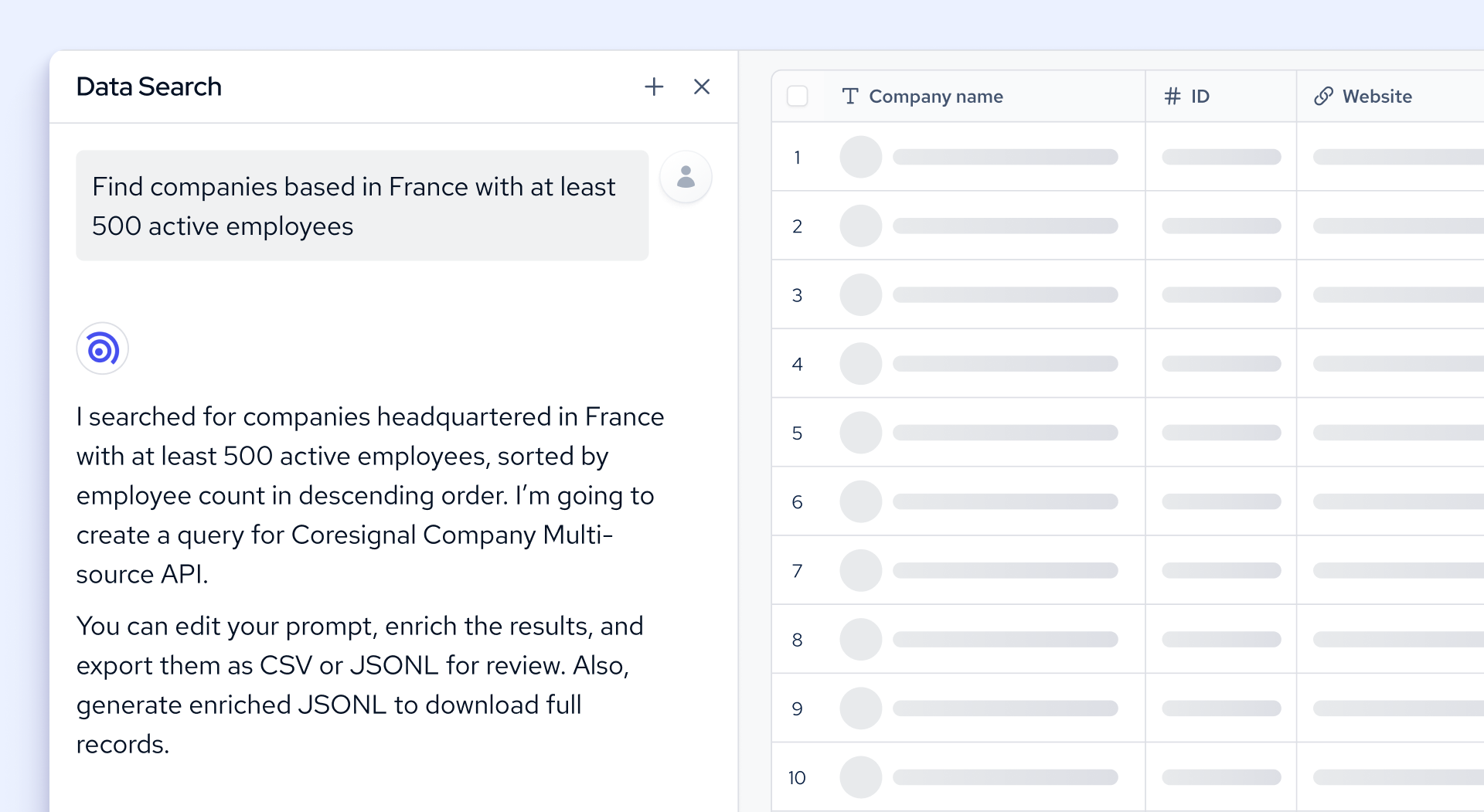
If your team prefers not to write queries or handle API documentation, I suggest trying Coresignal's Lists feature, which simplifies the process.
- Describe the data you need in plain English, and the AI generates a structured list of matching records.
- Refine your search in chat and select additional data fields.
- Export up to 100 records for preview, or download up to 10,000 multi-source records as a JSONL file.
- No engineering required, goes from prompt to ready-to-use dataset in seconds.
Top 5 use cases for modern company databases in 2026
From what I've seen, businesses have changed how they use company data a lot in recent years. It's not just about looking up a phone number or mailing address anymore. Here are the five most common ways I notice, and where structured company data really helps.
- Investment research and sourcing: with this approach, you can evaluate the funding signals of private companies, as well as check their headcount growth and work portfolio through historical records.
- Sales intelligence and lead generation: it’s also possible to pinpoint target accounts based on firmographic and technographic signals and growth indicators.
- AI model training and data enrichment: structured company datasets can be used to train AI models, especially with multi-source platforms.
- Market segmentation and competitive analysis: you can do full market segmentation research by industry, geography, size, and level of technological adoption.
- HR tech and talent analytics: a reliable database allows you to analyze hiring trends and check salary benchmarks across different industries.
How do I integrate company data into my CRM using an API?
API-based CRM enrichment is the most common way for businesses to include external company data into their workflows. To cut things short, it’s possible to automatically populate or update fields by connecting your CRM to a company data API of the providers we’ve listed.
From that point on, your CRM identifies a company record and sends a request to pull information via the API. The API then maps the output to match the corresponding CRM fields in supported formats like JSON.
How much does a company database typically cost?
The exact cost of using a company database depends on a variety of factors, such as usage volume, data coverage, freshness, and delivery method. Plus, most modern providers, like Coresignal, implement a credit-based system, so you only spend what you must on each query.
For instance, Coresignal offers a free trial with 200 Collect and 400 Search credits. You can use them for initial research, which sits at around 2 credits for a multi-source pull and additional credits for the API playground type and information pulled.
Businesses that need a frequent influx of fresh data in their workflows might benefit more from the Starter plan, which is $49/month, while enterprise-level options like Pro ($800/month) and Premium ($1,500/month) include thousands of credits necessary for hourly checkups.
How is the company data market changing in 2026?
The increasing use of AI is the main driver of change in the company data market this year. As a data provider, we've been closely watching this shift.
I recently came across a Gartner overview on how AI is expected to influence data and analytics in 2026. According to their findings, AI will impact every aspect of the data ecosystem, from governance and talent strategies to market dynamics and decision-making. That's something we think about a lot, because it means we need to evolve just as much as the teams we serve.
We're also seeing multi-source datasets gain real traction among our customers. When you need verified, real-time information without duplicates or unreliable records, a single-source approach just doesn't cut it anymore.
API-first access is another shift we're seeing firsthand. More teams are coming to us as they build AI agents, automate outreach workflows, or set up dashboards that require daily updates, and they need data infrastructure that keeps pace.
What's clear to us is that clean, structured, and accurate data is now the baseline expectation. That's exactly why we've built Coresignal the way we have: to reduce the learning curve and make company data accessible to any team, regardless of size or technical depth.