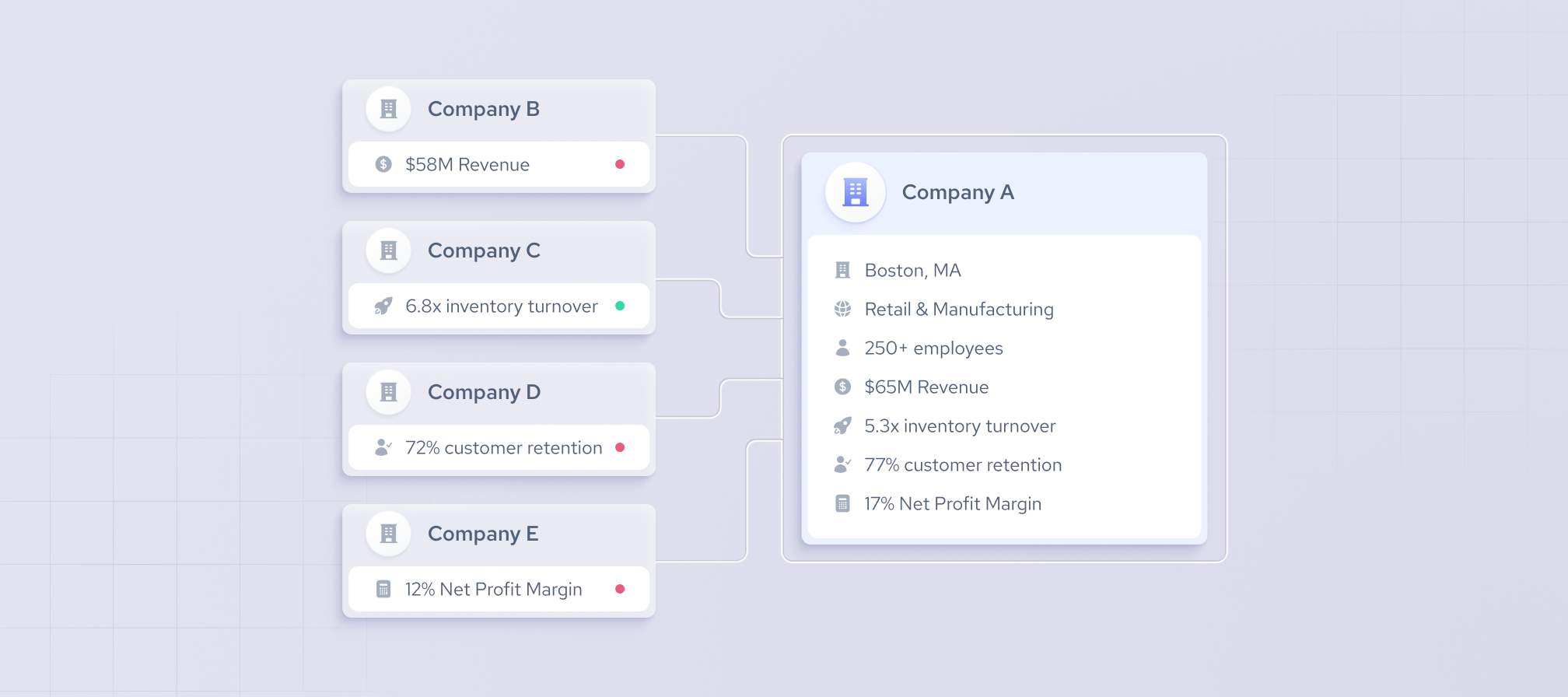


A competitor's new pricing tier, a wave of engineering job postings, or a quiet change in homepage messaging can signal a strategy shift months before any announcement. The companies that catch these signals early have more time to respond.
This article covers which competitor signals to track, how often to check them, and how to turn changes into decisions.
What is competitive monitoring?
Competitive monitoring is the continuous, systematic tracking of changes at competing companies. It covers their products, pricing, expansion, marketing strategies, and more.
Unlike a one-time competitive analysis, it runs on a set schedule and flags changes as they happen. For example, following a competitor's social media over time shows which campaigns it runs and how it responds to industry shifts.
The aim of competitive monitoring
The ultimate goal in competitive monitoring and business, in general, is to be the industry leader. Identifying and tracking the competition is the key aspect to achieving that.
It's an extensive process of constant monitoring. One-and-done scenarios simply do not work here. Keep in mind that you are not the only business that's evolving thanks to competitive monitoring. Other businesses do that as well.
As a result, continuously keeping track of the competition is arguably the most important facet of the process.
What is the difference between company monitoring and competitive analysis?
These terms often get used interchangeably, but they describe different parts of the same work. Competitive monitoring collects the changes. Competitive analysis interprets them, meanwhile, competitive intelligence turns them into strategy.
What you should monitor about competitors?
The most useful competitor signals are the ones that show a change in direction before it becomes public. Focus on these areas.
- Headcount and team growth. Changes in headcount show whether a competitor is growing, holding steady, or cutting back. Growth in specific departments, such as engineering or sales, often reveals where the company is investing next.
- Job postings. Job postings are one of the earliest signals of strategy. New roles in a region can point to market expansion, while postings that list specific skills or tools can hint at upcoming products.
- Workforce movement. Track aggregated trends in who joins and leaves a competitor. A spike in departures from one team can signal internal problems. A string of senior hires from a specific industry can signal a new focus.
- Funding and investments. New funding rounds usually lead to hiring, product development, or expansion. Tracking them helps you anticipate a competitor's next moves.
- Technology stack. The tools a competitor adopts or drops can show shifts in how it builds products, sells, or runs operations.
- Firmographic changes. Firmographic data covers basic company details, such as industry, size, location, and founding date. Updates here, like a new office or a change in industry focus, can mark a strategic pivot. The same filters also help you spot new competitors entering your market.
- Social posts. Company posts show which products, messages, and campaigns a competitor is pushing. Changes in tone or focus over time often reflect a change in positioning.
- Employee reviews. Reviews from current and former employees offer a view into a competitor's internal climate. Recurring complaints about leadership or workload can point to weaknesses you can plan around.
Pricing pages, product releases, and website messaging are also worth watching, since they show how a competitor presents itself to buyers.
How to monitor your competition?
Effective competitive monitoring follows a repeatable process. These six steps help you move from scattered observations to a system your team can rely on.
1. Identify your competitors
Start with a competitive monitoring search. Filter companies by industry, size, location, and product focus to build a list of direct, indirect, and emerging competitors. Detailed company research on each one helps you decide which rivals deserve the closest attention.
2. Choose the signals to track
You can't track everything, so pick the signals that matter most to your goals. A sales team may focus on hiring and expansion, while a product team may watch releases and technology changes.
3. Select your data sources
Match each signal to a reliable source. SEO tools track keyword rankings and content performance, and social listening tools follow competitor accounts and mentions. Public web data covers signals like job postings, headcount, and funding.
4. Set a monitoring cadence
Decide how often to check each signal. Fast-moving signals, such as pricing or job postings, may need weekly checks or automated alerts. Slower signals, such as funding or firmographic changes, can be reviewed monthly or quarterly.
5. Assign owners
Give each signal a clear owner. When someone is responsible for reviewing changes, insights reach the right team instead of sitting unread in a dashboard.
6. Turn changes into action
Review findings regularly and link each change to a decision. A competitor targeting your top keywords may call for new content, while a hiring spike in a new region may call for earlier outreach to accounts there.
Data for competitive monitoring
Competitive monitoring runs on structured data that both people and AI agents can use.
How to access competitor data
- Datasets suit teams with data engineers who run their own trend analyses. Coresignal’s company data is delivered as JSONL or CSV.
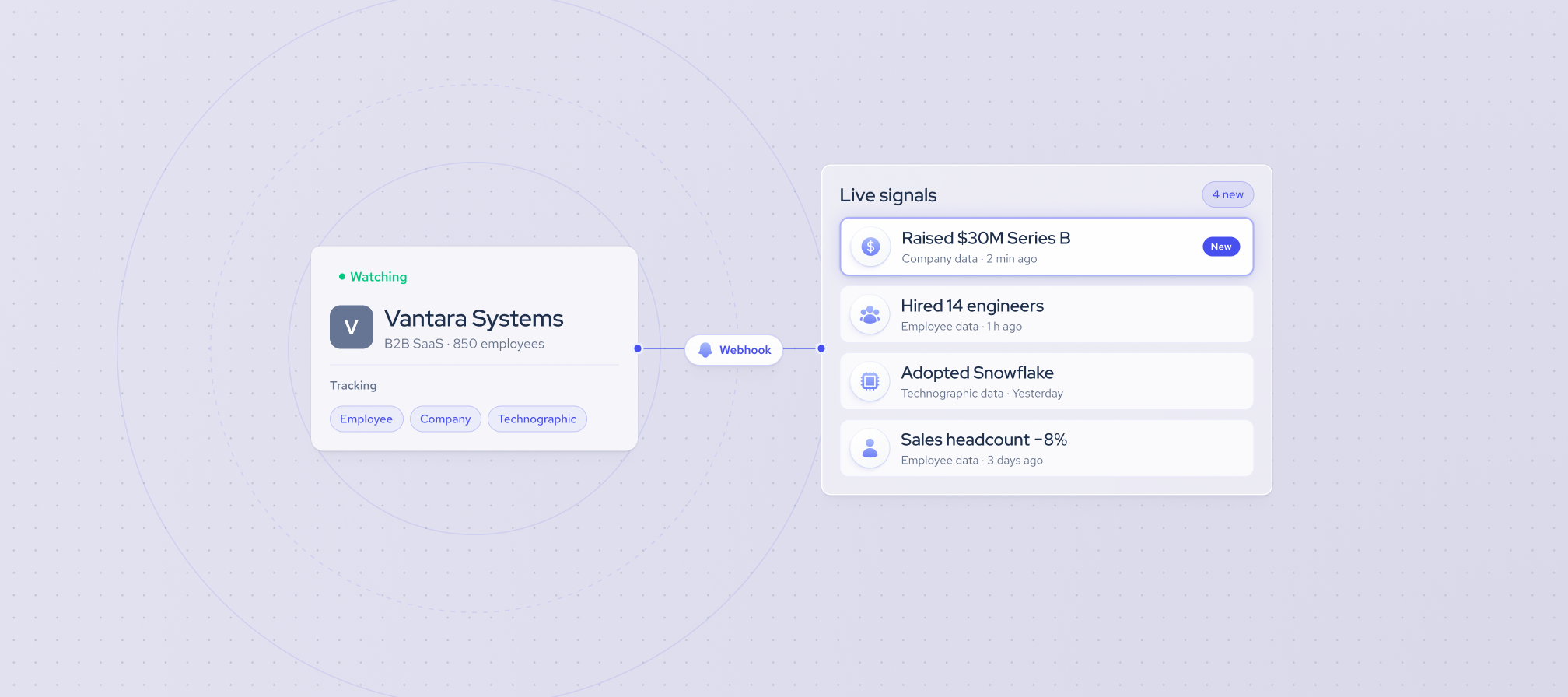
- APIs return fresh records on demand. Webhooks send automatic notifications when data changes.
- AI-ready access lets agents run the research. Coresignal’s Agentic Search API answers natural language prompts, and the MCP server connects the data to AI tools.
Types of data for competitive tracking
- Firmographic data helps you find competitors and spot new entrants.
- Job postings data shows where competitors are hiring and what they're building.
- Employee data reveals headcount trends and department growth.
- Funding data signals upcoming expansion.
- Technographic data tracks changes in a competitor's tech stack.
- Social posts data shows shifts in campaigns and positioning.
- Company employee review data offers a view into internal climate.
In conclusion
Competitive monitoring works best as a continuous process, not a one-time project. When you track the right signals on a set schedule, you see competitor moves early and have more time to respond.
The benefits add up quickly. Early signals, such as new job postings, headcount growth, or funding rounds, help you anticipate expansion and product launches. Regular competitive tracking also sharpens pricing, messaging, and sales strategy, since decisions rest on current facts rather than assumptions.
Reliable data holds the process together. Fresh, structured public web data lets you automate alerts, compare competitors over time, and feed insights into dashboards or AI workflows. Start with a short list of competitors and a few high-value signals, then expand as your process matures.