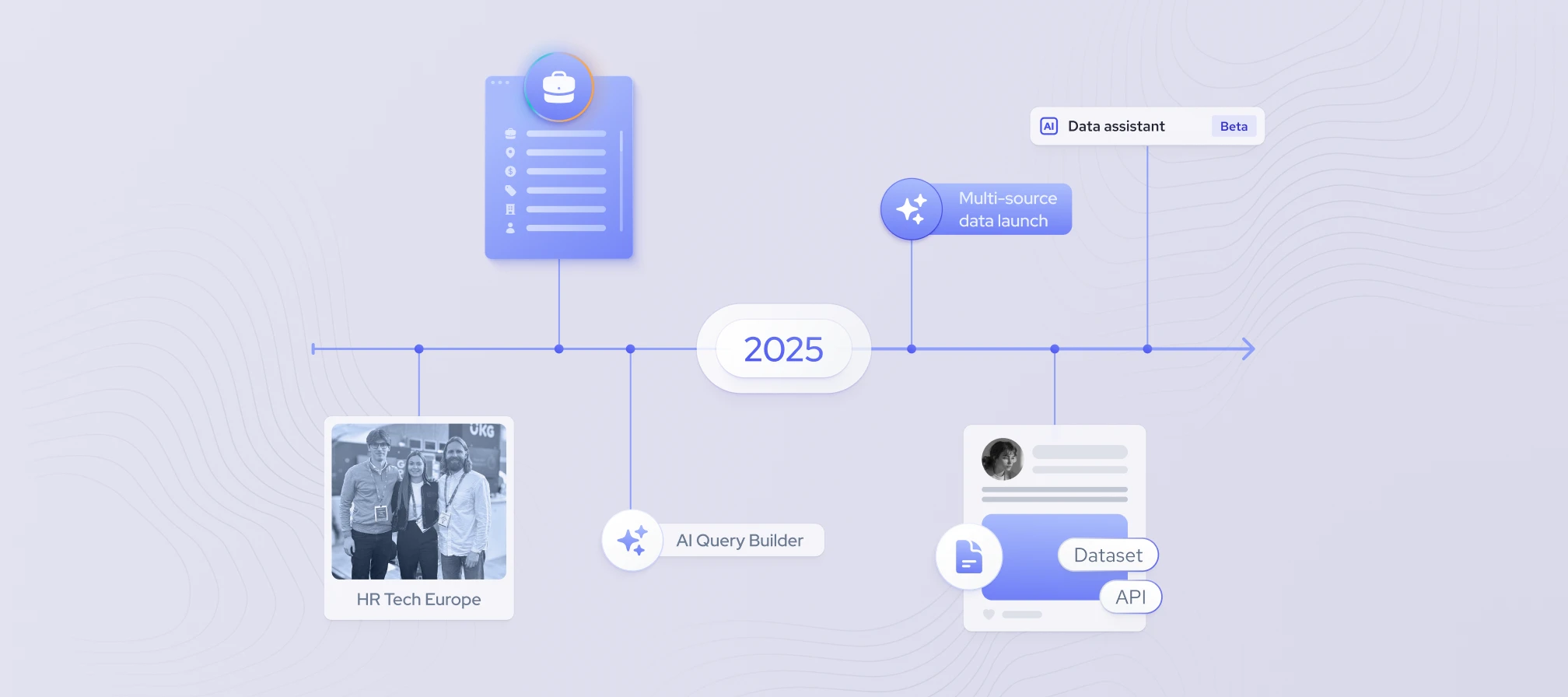




We started as a small startup back in 2016, and today, we have grown into a global team of over 80 people that is trusted by more than 1,000 companies.
We've launched products we didn't know we'd need to build and watched our customers find use cases for our data that we couldn't predict. The journey hasn't always been linear. But looking back at it, it's hard not to feel good about where we've ended up and excited about where we're going.
I'm feeling nostalgic as I take a look back at the milestones that shaped us, from our first products to agentic AI infrastructure. Here are some of the key highlights.
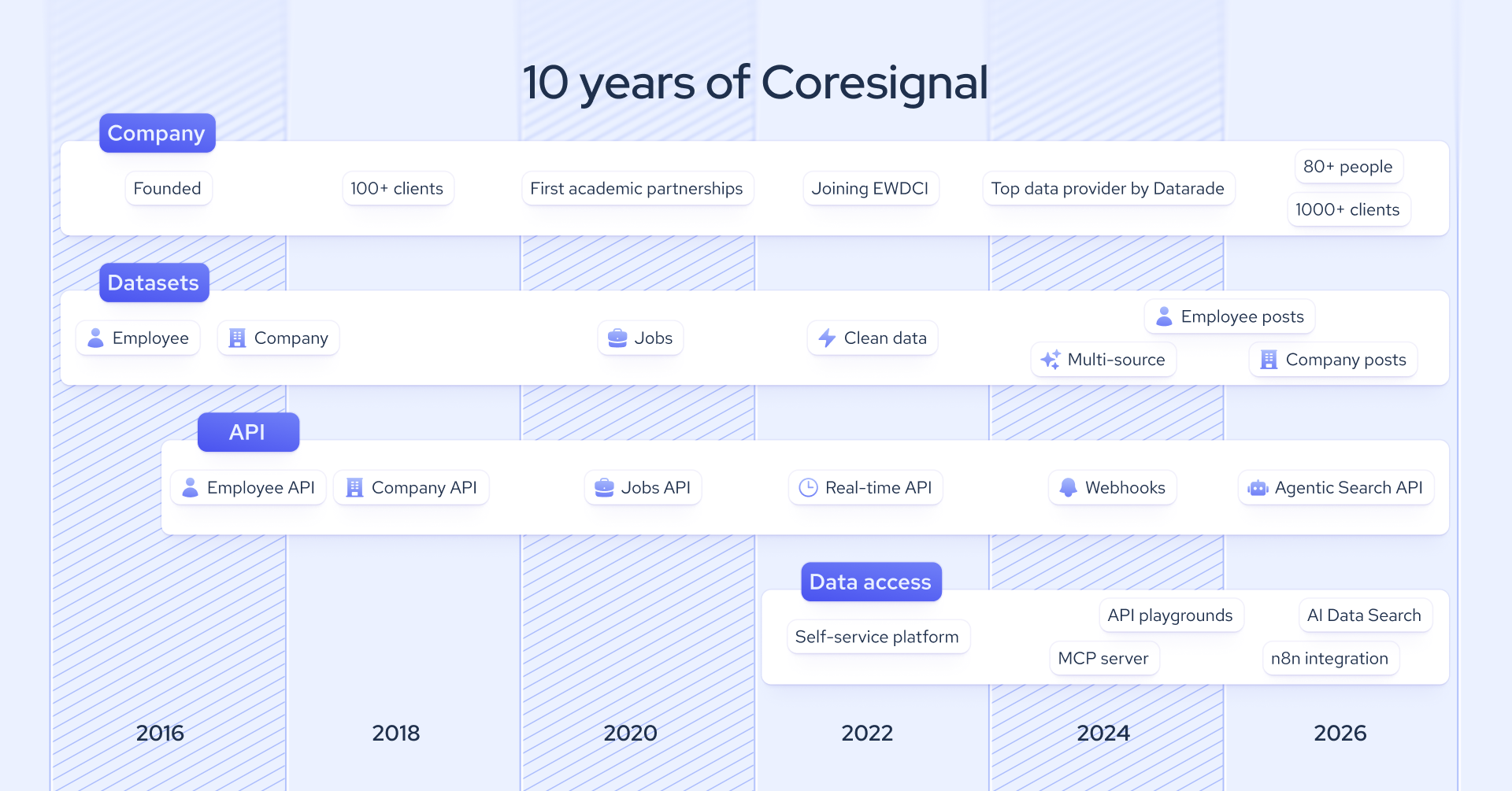
2016: Founding the company: year of pure chaos
We launched with a simple premise: to collect professional and company data from the public web. Our first products were company and employee datasets, the same core categories that sit at the heart of the platform today. The delivery method, however, looked nothing like it does now.
In the beginning, we had no API. Data went out as flat file dumps, manually packaged and shipped to customers on a schedule that was optimistic in theory and chaotic in practice. A single data dump could take two weeks to process, and if anything went wrong midway, there was no way to restart from where it left off. You'd wait out the failure, then start the clock again from scratch.
It was, by any measure, not a scalable system, but it worked well enough to prove there was real demand for what we were building. In 2020, we also added jobs data into the mix.
2017: Building the first APIs
Our first real API came about almost by accident.
A single client needed something more dynamic than flat files, so we built a custom real-time API specifically for them. It was a one-off solution that was never intended to become a product. What started as a bespoke integration quietly became the architectural foundation for everything that followed.
Hitting 500–700 profile updates per minute felt like a huge milestone at the time. In hindsight, it was the moment our product was born. We’ve spent the next few years building up our datasets and APIs, and today we offer more than 10 company, employee, and job data APIs, including the Historical Headcount API and Agentic Search API.
2021: Launching our first academic partnerships
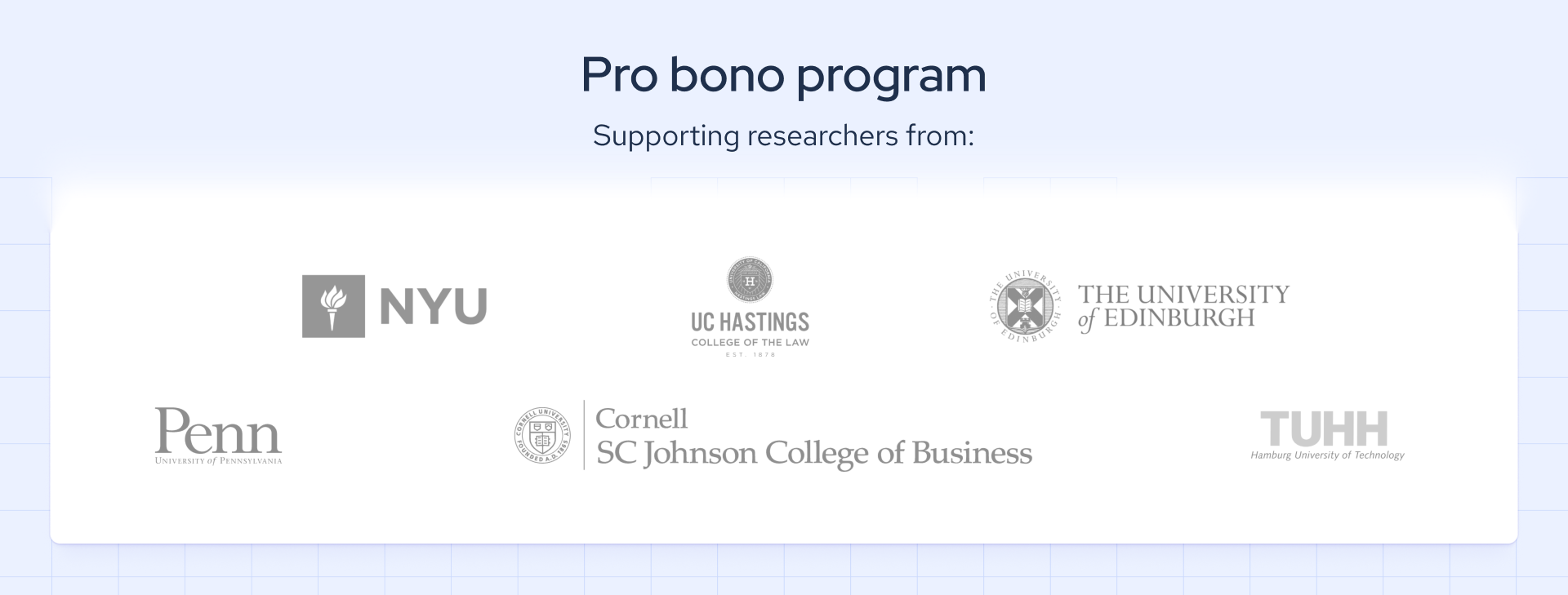
As we began to find our footing in the market, we decided it was time to give back. In 2021, we launched our first pro bono partnership, providing free access to our labor market and professional web data for academic research.
Over the following years, the program supported researchers from Cornell SC Johnson College of Business, UC Hastings Center for Business Law, the University of Technology Hamburg, the University of Pennsylvania, the University of Edinburgh, and New York University. The research covers workforce effects of financial distress, tech entrepreneurship career paths, post-pandemic labor shortages, gendered language in job ads, and the hiring impact of the affirmative action ruling.
2023: Joining the Ethical Web Data Collection Initiative
We wanted to lead on the ethics of data collection rather than react to external pressure. So we joined the Ethical Web Data Collection Initiative (EWDCI), an international, industry-led consortium committed to improving transparency and public accountability in how public web data is collected and used.
By becoming a founding member, we weren't just adopting an external standard. We were helping shape the direction of the industry's self-regulatory framework. Less than a year later, we earned formal EWDCI certification, confirming that our data collection practices had been independently assessed against its principles of transparency, accountability, and responsible data use.
2023: Launching our self-service data platform
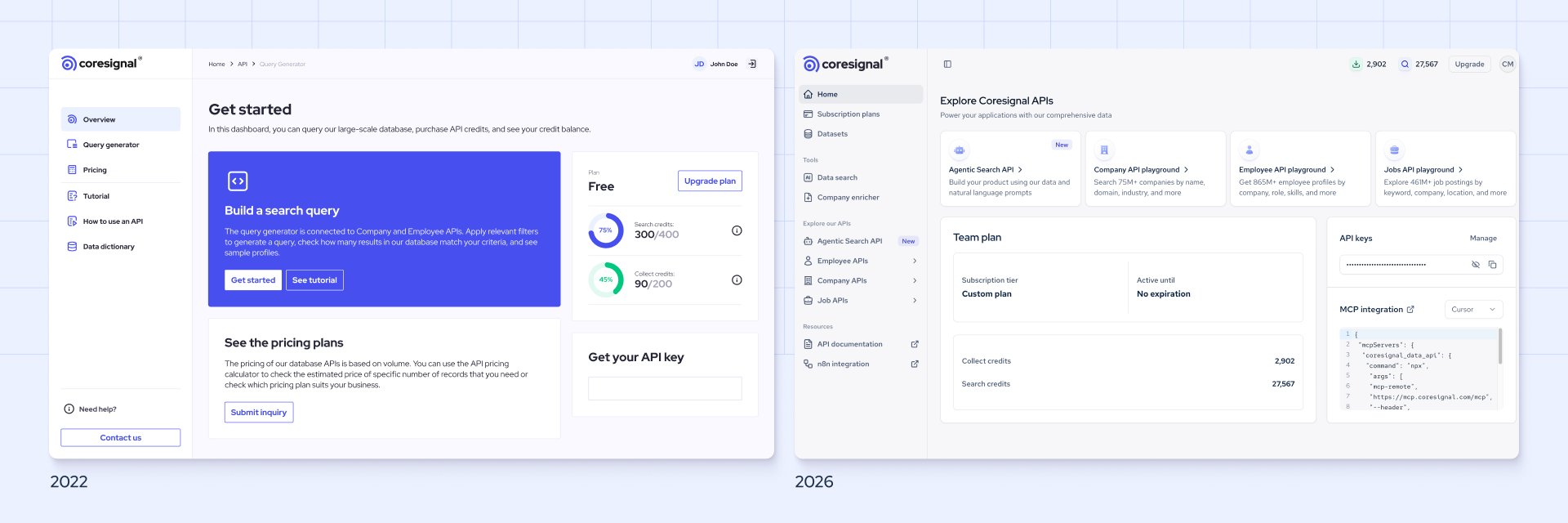
In July 2023, we launched our self-service API tool, giving customers direct access to our full database without going through a sales process. Anyone could sign up, explore with free credits, and get to a working query.
That foundation grew into a full no-code stack over the following years: data enrichment and bulk CSV downloads in 2024, an AI Query Builder in 2025 that wrote queries from plain English descriptions, and finally the AI Data Search Tool and List feature, letting anyone go from a natural language prompt to a downloaded dataset without writing a single line of code.
2024: Innovating with multi-source data coverage
In 2024, we launched Multi-Source Company Data, our first product to aggregate and reconcile records from multiple public web sources into a single, AI-enriched, deduplicated dataset. Rather than accepting the blind spots of any one source, we combined 500+ data fields and handled the entity resolution and cleaning ourselves.
We then extended the same approach to employee profiles (300+ fields including experience, skills, salary signals, and employer history) and completed the set with the Multi-Source Jobs Dataset, aggregating postings from multiple job boards, deduplicating overlapping listings, and enriching each record with company and recruiter details.
Three datasets, three core categories, one unified multi-source standard.
2025: Behavioral signals from social posts data
In September 2025, we launched the Employee Posts Dataset that contained over 370 million records of professional posts, comments, and interactions published publicly by individuals.
Where profile data captures what someone is, posts data captures what they're actively saying: the topics they write about, the content they react to, the conversations they join. That behavioral layer unlocks use cases that static profiles simply can't, such as intent detection, thought leadership mapping, and identifying decision-makers engaging with competitor content.
In June 2026, we completed the picture with the Company Posts Dataset, applying the same logic at the organizational level.
2025–2026: Building for the agentic AI era
Our pivot toward AI-native infrastructure started in 2025 with the launch of our MCP server, enabling developers to connect our data directly to LLM-powered applications without any custom integration work. It was an early bet on where enterprise software was heading, and a deliberate statement of direction.
In spring 2026, we took that further with the Agentic Search API, a purpose-built interface for AI agent workflows that accepts natural language and returns structured B2B data on the fly. For straightforward lookups, the /fast endpoint handles the job. For complex cases with layered filters and ambiguous prompts, /reasoning figures out what's actually being asked before retrieving anything.
Most recently, we launched a native n8n integration, letting users pull our data directly into automated workflows alongside hundreds of other services, no custom code required. Wherever AI agents and automated workflows need reliable, structured B2B data, we want to already be there.
What's next?
If the last few years have taught us anything, it's that the way businesses interact with data is changing faster than anyone predicted. AI agents are replacing manual research workflows, automating GTM motions, and making decisions that once required a human analyst.
For us, that means doubling down on being the data layer that AI agents can actually rely on.
None of this would happen without the people behind it. We started as a tiny team that figured things out as we went. Today we're 80+ people strong, and I'm proud every day of the expertise, curiosity, and care this team brings to the work.
As we grow, our bet is simple: combine the best minds with the best technology, and see how far that takes us.
We are ten years in. The next ten will be even more interesting. I can't wait to see what's next.