


Compare top alternative data providers in 2026
This page compares leading alternative data providers in 2026, focusing on data quality, coverage, pricing, and delivery methods. The provider you choose directly affects the reliability of your insights, the strength of your data pipeline, and your business success.


Leading alternative data vendors
|  |  |  | |
|---|---|---|---|---|
| Coresignal is a public web data provider that offers real-time, multi-source data on companies, jobs, and professionals | Bright data offers web scraping software and sells datasets as an additional offering | Thinknum provides datasets for investors that reveal strategic movements within companies | Yipitdata provides insights on companies derived from data to help investors and companies make smarter decisions | |
| Company profiles | 75M+ | 58.8M+ | 450 000+ | 2000+ |
| Professionals profiles | 859M+ | 668.7M+ | Unspecified | Unspecified |
| Job postings records | 448M+ | 109.4M+ | 11,446 companies tracked | Unspecified |
| Aggregated multi-source data | Yes | Yes | Unspecified | Unspecified |
| Data formats |
|
|
|
|
| Delivery methods |
|
|
|
|
| In line with GDPR/CCPA | Unspecified | Unspecified | ||
| Technical support | Unspecified | Unspecified | ||
| Documentation | Unspecified |
Coresignal provides the largest and ready-to-use datasets of company, employee, and jobs data. With a balanced combination of scale, diversity, and flexible delivery methods Coresignal makes integration seamless for different technical needs. Altogether, this breadth, flexibility, and data freshness position Coresignal as a leading choice among other top business data providers.
APIs for alternative data: comparison
Accessing real-time alternative data starts with choosing a provider that offers an API, while webhooks ensure you receive critical signals the moment changes occur. The table below compares the leading providers on features such as Elasticsearch support, self-service dashboards, and free-trial availability, so you can clearly identify which provider offers the most complete and actionable solution.
| | | | |
|---|---|---|---|---|
| Company API | Unspecified | |||
| Employee API | Unspecified | Unspecified | ||
| Jobs API | Unspecified | Unspecified | ||
| Real-time data | Unspecified | Unspecified | ||
| Self-service dashboard | ||||
| Free trial | Unspecified | Unspecified | ||
| Data change webhooks | Unspecified | Unspecified | ||
| Elasticsearch | Unspecified | Unspecified | Unspecified |
The comparison provided herein is based on public data available as of Mar 30, 2026. All users should verify the current status of products, services, or offerings before relying on any comparative information.
What is alternative data and how it is used?
Alternative data refers to information about organizations available outside of traditional financial and regulatory reporting channels, including job postings, web-scraped data, geolocation signals, payment transactions, and social media activity. It is commonly used to identify patterns, gain market intelligence, and extract timely insights about a target industry, company, or user base.
In 2026, as the alternative data market grows rapidly and generative AI unlocks deeper insights from expanding data volumes, choosing the right alternative data provider is more critical than ever for businesses seeking a genuine competitive edge.
Alternative data source types
Digital activity data
Web-scraped data, internet traffic, email, and information from mobile devices and apps that capture real-time behavioral signals.

Financial and transactional data
Payment card transactions, point-of-sale information, and rewards programs that reveal spending patterns and consumer behavior.
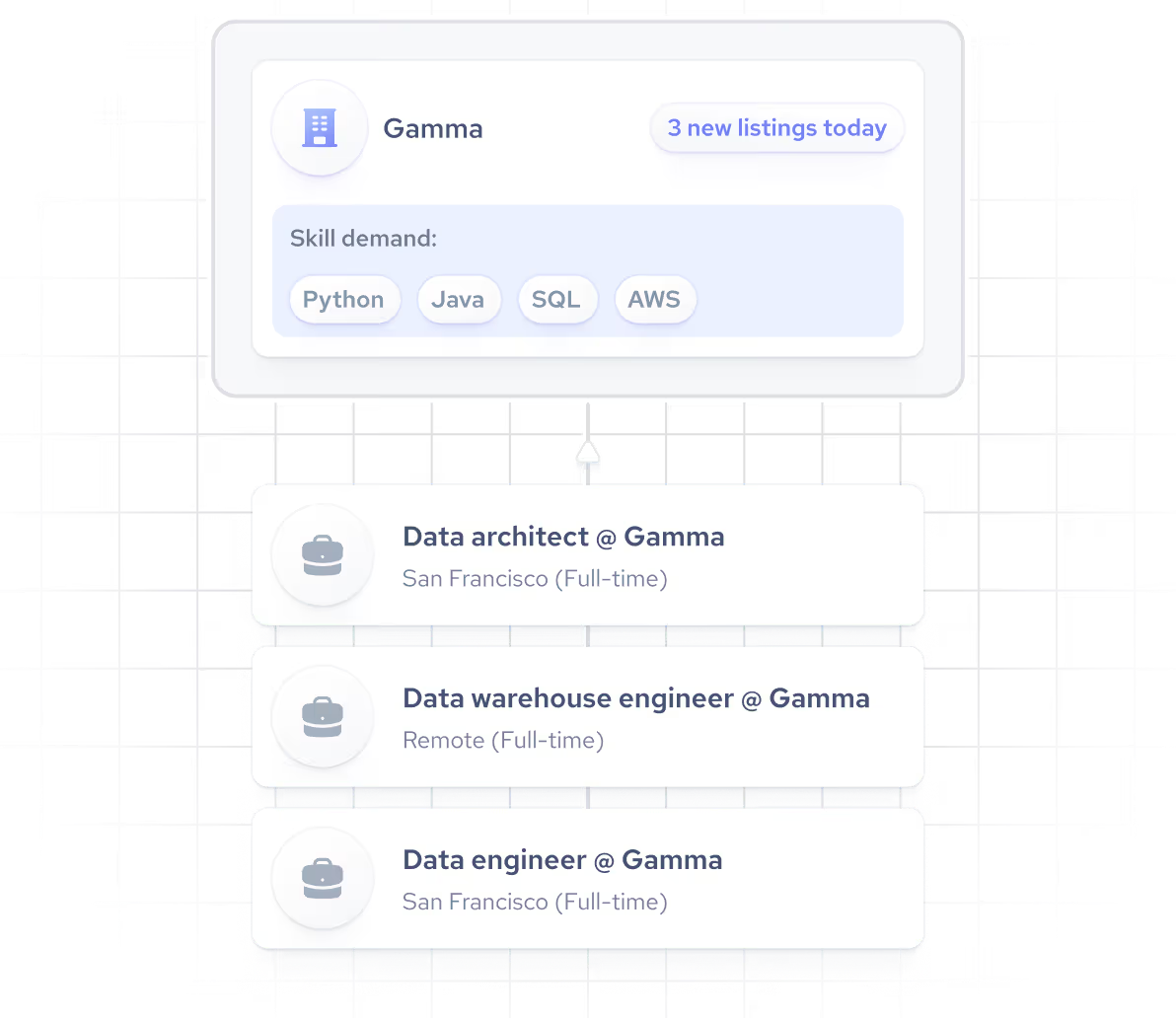
Location and sensor data
Geolocation data, satellite data, IoT-based devices, and sensors that provide physical insights into organizational activity.
Social and community data
Social media information and online community activity that uncovers sentiment, trends, and public perception around a company or industry.
Key use cases of alternative data
Alternative data is used across a wide range of industries and functions, offering unique insights that traditional data sources cannot provide. Here are the most common use cases of alternative data:
Market intelligence
Organizations use alternative data to identify patterns and trends across industries, enabling more informed and timely business decisions.
Competitive advantage
Businesses leverage multiple alternative data points to gain insights about competitors, helping them stay ahead in their markets.
Investment and trading strategies
Trading firms use alternative data to obtain signals, evaluate opportunities, and make data-driven investment decisions.
Sales intelligence
Alternative data enables sales teams to identify prospects, track organizational changes, and time outreach more effectively by surfacing real-time signals about target companies.
Need a reliable source of alternative data?
Let's arrange a time for a quick call and discuss your use case.


Check out our datasets & APIs
Database API
Search and enrich whenever needed with direct access to a large-scale, real-time jobs database, with API response times averaging 176 ms. After trying APIs with free credits, select from multiple subscription plans suitable for businesses of any size.








Datasets
Build innovative solutions using comprehensive job postings data or leverage it for in-depth analysis and unique job market insights. Request a data sample or explore on your own using the self-service platform.
How to evaluate alternative data providers?
Considering the right alternative data provider is a decision that can directly impact the quality of your insights and the success of your data strategy. The key factors in selecting the provider include data coverage and depth, freshness, delivery, accessibility, and responsible data collection.
Coverage and depth
The provider should offer broad and deep coverage across industries, geographies, and data sources, ensuring you have access to the most comprehensive and relevant data points for your use case. A provider with limited coverage may leave critical blind spots in your analysis, making it harder to draw accurate and actionable conclusions
Freshness
Data loses its value the moment it goes stale. A closed role or filled posting can quietly derail your pipeline, which is why real-time freshness is essential. Quality alternative data arrives structured, cleaned, and deduplicated, backed by historical depth and record-level timestamps so you always know exactly what you're working with.
Delivery and accessibility
Look for providers that offer flexible delivery options such as APIs, webhooks, and datasets, making it easy to integrate data directly into your existing pipeline and access it on demand. The ability to retrieve real-time signals through APIs or receive instant notifications via webhooks can be a decisive factor for time-sensitive use cases.
Responsible data collection
Trusted data providers are committed to ethical collection of public web data and prioritize data security. Before making a decision, evaluate if the data provider stays in live with data privacy practices and has clear guidelines for data security.
Why data freshness is one of the most important factors
Data should be regularly updated and as close to real-time as possible, as outdated information can lead to inaccurate decisions, poor targeting, and misleading analysis that drives your business in the wrong direction.
The impact of data freshness varies by use case. For investment and trading strategies, even a slight delay can mean a missed opportunity, while for sales intelligence, stale records can result in wasted outreach efforts and poor conversion rates. In the context of AI and machine learning, freshness is especially critical, as models trained or fed on outdated data will produce unreliable outputs, and no matter how sophisticated the algorithm, it is only as good as the data behind it.
Coresignal addresses this by offering frequently updated, large-scale, multi-source data coverage, with API records updated in real time, ensuring that every insight you extract reflects the current state of the market.

Get high quality data from leading B2B data providers

Company data providers
Identify new sales prospects or investment opportunities.

Jobs data providers
Choose the right provider for HR tech or recruitment business.

Employee data providers
Boost hiring and ensure workforce planning with professional and skills data.

Lead data providers
Support sales prospecting and growth with B2B lead data.

Alternative data providers
Find the best company, employee, and jobs data providers.

Private market data providers
Access data on private companies, funding activity, and growth signals.

Talent data providers
Match the best candidate with the right position using fresh data.

Recruiting data providers
Improve candidate sourcing and unlock hiring trend analysis.
About Coresignal
Coresignal is a public web data provider that delivers fresh data to global companies in investment, sales technology, HR technology, research, and other industries. Founded in 2016, the company now has 700+ clients and 70+ employees.
In 2023, Coresignal was named the top data provider by Datarade and became a founding member of the Ethical Web Data Collection Initiative, an organization promoting ethical data collection.
