


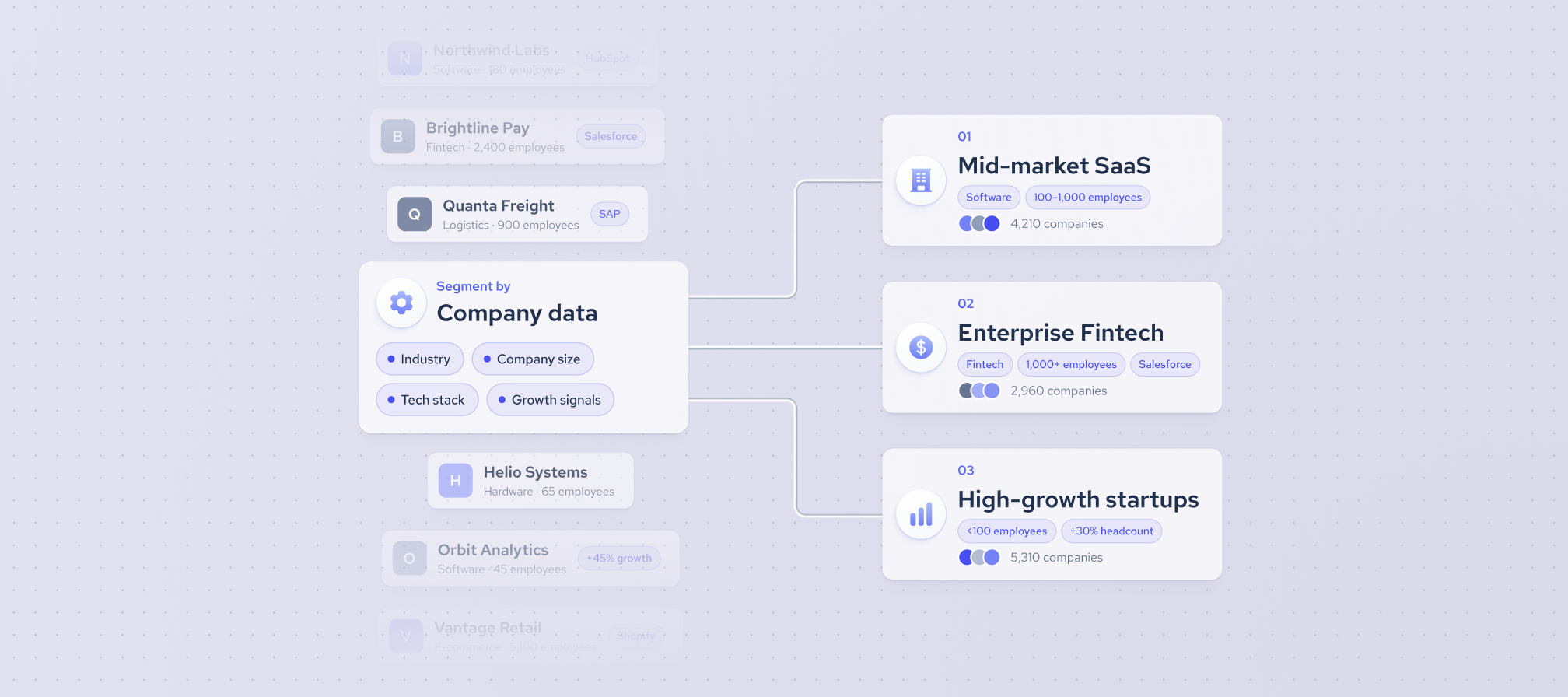
Think of two SaaS companies that are in the same industry, have the same headcount, and are based in the same city. One's scaling fast on fresh funding and the other's flat, running on legacy infrastructure. If you’d segment them by industry and size alone, they’d land in the same bucket even if they call for completely different strategies.
Company segmentation helps you avoid mistakes like that by combining different data categories such as industry, technology use, funding, and growth signals. This gives you groups defined by concrete, verifiable traits rather than a shared industry label that may hide very different companies underneath.
Whether you're building an ICP, refining marketing, or doing research, this approach turns a messy list of companies into groups that actually make sense and help you make better decisions.
What is company segmentation?
Company segmentation, also called firmographic segmentation, means grouping businesses that share similar traits. These traits can include industry, size, location, revenue, or company structure.
Company segmentation helps sales teams target accounts most likely to convert and helps marketing tailor messaging to a segment's specific pain points, rather than a one-size-fits-all pitch.
What data can be used to segment B2B companies?
The precision of a B2B segment is a direct function of how many independent signals feed into it. A segment built on industry alone will always be coarser than one built on industry plus hiring and growth data. Here are the main categories of company data to build precise segments:
- Firmographic data – shows company industry, size, location, revenue, type, founding year, and other relevant company-level information
- Technographic data – reveals the technologies the company uses, including its software stack, type and number of tools
- Workforce data – provides insight into the company's human capital, including headcount, department size, leadership composition, and headcount growth
- Hiring data – shows the number of open roles, hiring by department, geographic hiring activity, and skills being hired for
- Company growth signals – show funding, acquisitions, geographic expansion, company posts/announcements, and historical growth data
Depending on your business goal, combining data can create significantly more value. One recent study combined firmographic attributes (activity sector and geolocation) with transactional data. The result was a far richer set of segments, surfacing multiple meaningful and actionable groups, while transactional data alone has produced only one.
What are the main ways to segment companies?
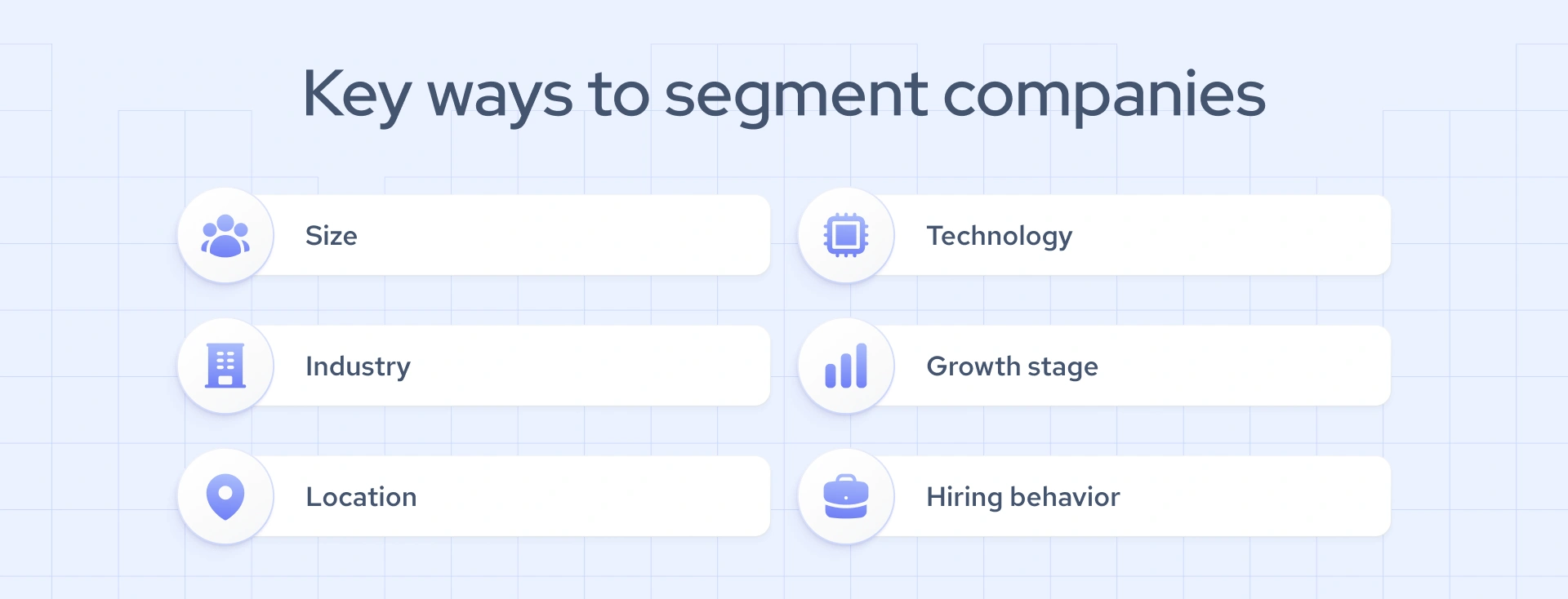
There is no one right way to segment companies, as the best approach depends on your use case. That said, there are a few common data categories that hold regardless of whether you're segmenting for sales, research, or market mapping:
- Location: country, region, city
- Size: headcount, revenue bands
- Industry: main industry, sub-industry, niche
- Technology: tech stack or specific software usage
- Hiring behavior: hiring intensity, departments hiring, skill demand
- Growth stage: headcount growth, funding, company age, hiring activity
To get the best results with company segmentation, also consider your goals and ideal customer profile to improve targeting efficiency.
How do you choose the right company segmentation criteria?
Segmentation works best if it's built around a specific business goal. So, how you choose the right company segmentation criteria depends directly on your use case.
However, some practices are useful independently of your segmentation goal, such as:
- Start from business goal
- Choose variables that actually differentiate companies
- Avoid using too many criteria
- Use consistent thresholds
- Combine static attributes with dynamic signals
- Make sure data is fresh
- Create actionable segments
How can you segment companies at scale?
To segment companies at scale, you first need a proper data infrastructure. This is where platforms like Coresignal can help you streamline the process. Its company data already includes firmographic, workforce, financial, and technographic fields, with Multi-Source Company Data aggregating attributes from multiple sources into a single, structured record. That combination makes it possible to build precise, multi-signal segments instead of relying on a single data point.
With Coresignal, you can put your data to work in three ways:
- Company Data API – enables dynamic, programmatic filtering, so you can query company data in real time and build segments directly into your own tools, CRM, or workflows
- Company Dataset – suited for bulk segmentation and analysis, letting you work with large volumes of company records offline to build and refine segments across your entire target market
- AI Data Search or Agentic Search API – supports natural-language company discovery, so you can describe the segment you're looking for in plain language and let the system surface matching companies
Segmenting companies at scale with the right tools is easy. Below, we share a step-by-step guide showing you how. Below is a step-by-step guide on how to do it.
Step 1: Register for a free account
To start using Coresignal’s AI Data Search or Agentic Search API, first you must create an account. With the free trial you get:
- 7-day access to millions of records (no credit card required)
- 2,000 API credits
- Data enrichment features for your existing data base
Step 2: Write your prompt
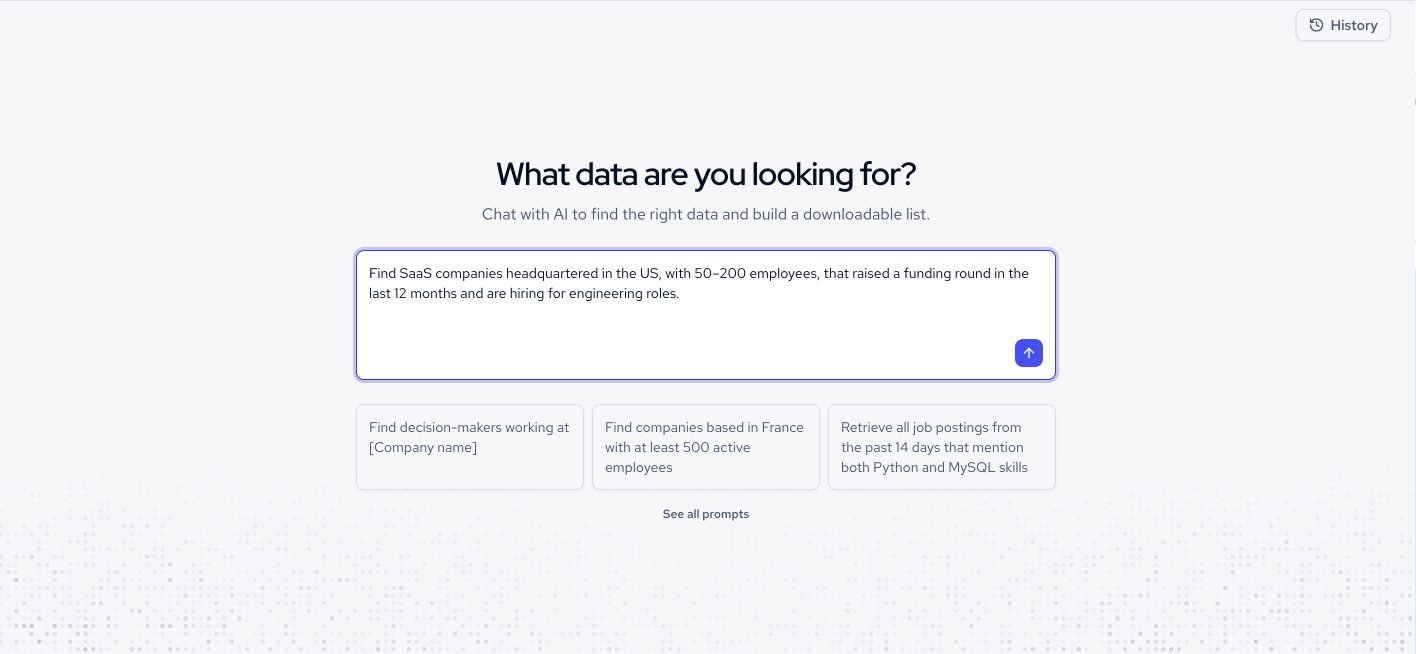
In Coresignal’s AI Data Search window, you can type in the prompt in your own words, without needing to write the query yourself. Simply describe several criteria at once to segment the companies based on what’s relevant to your search intent.
Step 3: Submit your request and review results
After you describe your segmentation criteria, submit your request. Coresignal will return a list of companies that match your query for you to review. Check the companies to see whether they match your search intent. If you want to make changes or improvements, you can modify your search in chat as you go.
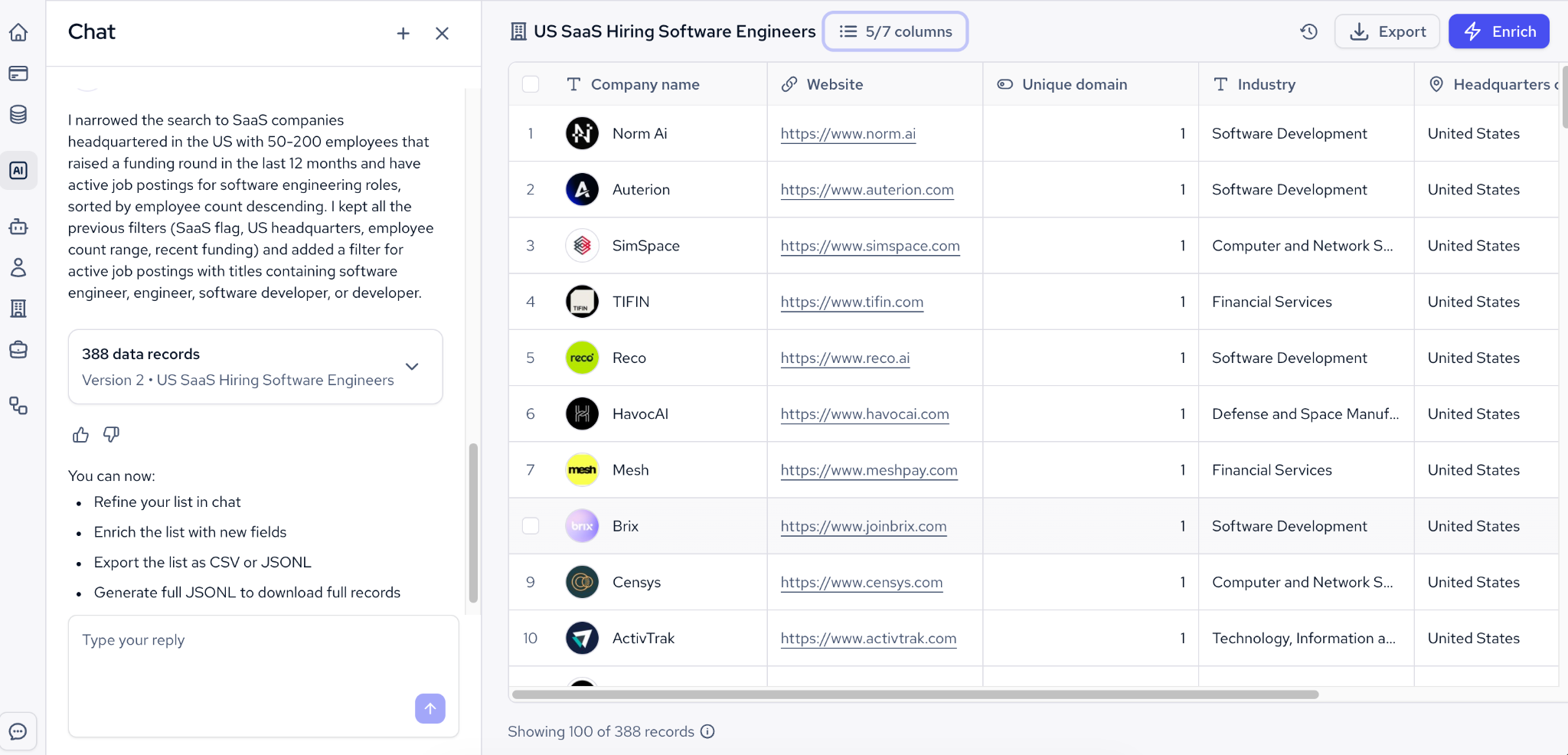
You can also enrich the data fields and add other relevant criteria, including employee count, last funding round date, active job posting counts, technologies used, and more.
Final thoughts
A segment built on industry alone will always miss what a segment built on industry plus funding and hiring data can catch. Combining firmographic, technographic, workforce, hiring, and growth data creates segments that reflect how companies actually operate, not just how they're labeled.
A sales team's segments will look different from a researcher's, but in both cases the segments that hold up are the ones you can measure against real data, act on directly, and revisit as hiring, funding, or headcount shifts. As your target market grows, doing this manually becomes impractical. Tools like Coresignal's Company Data API, Company Dataset, and Agentic Search API make multi-signal segmentation possible at scale, turning structured company data into segments you can actually act on.