




B2B data for market research covers company, employee, and job postings data that shows how big a market is, which companies fit a segment, and where demand is growing. For example, a cybersecurity company entering Germany can use company data to count potential customers and job postings data to see which competitors are hiring.
This data doesn't replace surveys or industry reports. Instead, it adds real-time market data signals that make B2B market research easier to measure and update. In this guide, we'll cover which data types support B2B market analysis and how to apply them.
What is market research?
Market research is the process of collecting data to analyze a market, including customer profiles, competitors, trends, and investment opportunities. It collects the scattered pieces needed to better understand a market and its direction.
Its value depends on the decision the team is trying to make. In B2B market research, pulling all the signals together fuels decisions about how best to enter a market, segment it, and assess the total addressable market (TAM). High-quality data can help teams make those decisions faster and with more confidence.
Why traditional market research is not always enough
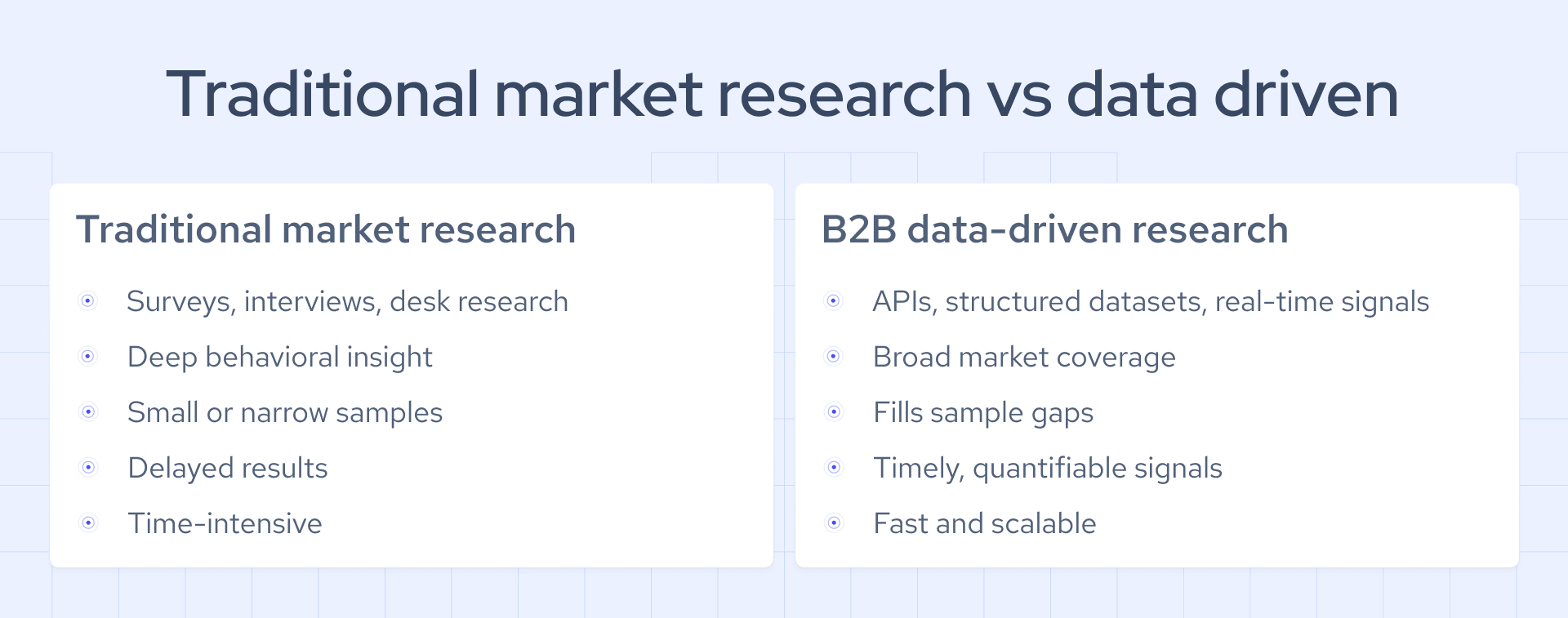
Using B2B data for market research does not replace traditional methods such as surveys, interviews, and desk research. Still, surveys and interviews take a long time to compile, which can delay decisions if the results arrive too late.
Small or narrow samples can also make it harder to identify market-level trends, and B2B data fills those gaps. Think of it this way: both traditional and B2B market research methods work in sync. It’s not a choice of one or the other; the two methods complement each other because they answer different questions.
Traditional market research remains essential for uncovering patterns like customer behavior and purchase frequency, while real-time market data and structured B2B signals provide the timely context needed to turn those findings into actionable insights.
What data is used in B2B market research?
The right market research data depends on the question you're trying to answer. These six data types cover most B2B market research needs:
- Company data. Also called firmographic data, it describes businesses by size, industry, location, and founding year. It helps you count how many companies fit your target market and group them into segments.
- Employee data. It shows how companies build and change their teams, including headcount, roles, and departments. Growth or decline in specific teams can point to new priorities or expansion plans.
- Job postings data. It shows which companies are hiring, for which roles, and in which locations. Rising hiring activity often signals demand, expansion, or new product investment.
- Technographic data. It describes the software and technologies companies use. It helps you see which tools are common in a market and spot companies that fit your product's tech requirements.
- Funding data. It tracks investment rounds and amounts raised. Recently funded companies may have a new budget to spend, which makes this data useful for spotting growth and prioritizing prospects.
- Historical data. It shows how any of the data types above have changed over time. It helps you separate lasting trends from short-term spikes, which makes B2B market analysis more reliable.
How real-time B2B data improves market research
B2B market analysis adds current market signals into the research mix. Historical and survey-based inputs can quickly become outdated. Continuously updated B2B data reduces that lag by providing more recent signals from hiring activity, company growth, locations, and technology adoption.
All that information helps reveal market demand, potential shifts, and hiring spikes that might indicate growth. Coresignal fits the description of a well-rounded public B2B data provider, offering company, employee, and job posting data that you can access as bulk datasets or directly via APIs. Regular updates help teams pull fresher multi-source data for market mapping, segmentation, and competitor monitoring.
Key B2B data use cases for market research
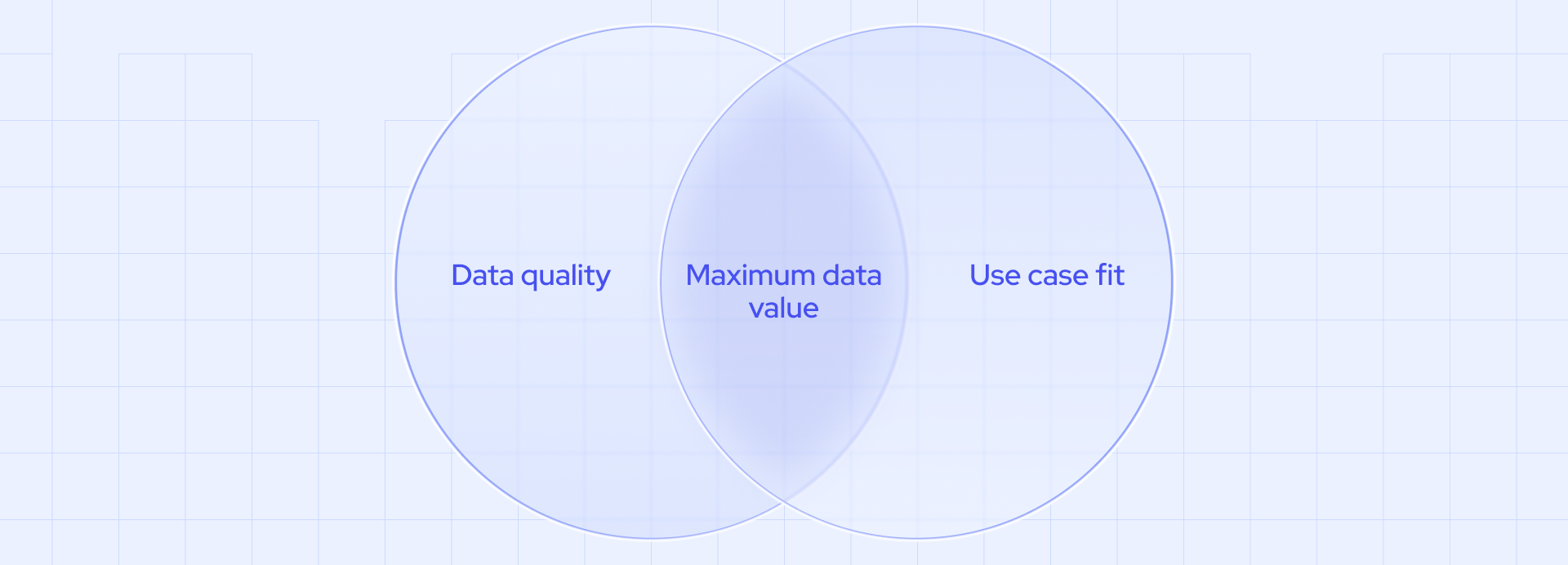
Two factors largely determine the value of B2B data for market research: data quality and use case.
Enriched and structured data, like Coresignal's, can be used for a variety of purposes, from market sizing to competitive intelligence. Below are ways on how it fits in based on the application.
Market sizing and TAM analysis
One of the main purposes of B2B data in market research is sizing. Fresh, up-to-date signals show the estimated number of companies in a market and reveal their firmographic and technographic details. These signals support TAM analysis by grounding market opportunity estimates in current company-level data.
Target market analysis
Target market analysis with real-time market data starts by analyzing current ideal customer profiles to identify the most relevant market segments. Focusing on shared characteristics such as industry, company size, geography, tech stack, and growth stage, and using these attributes as filters to evaluate the broader market and pinpoint segments with the highest conversion potential. B2B data signals help you distinguish which segments are truly worth prioritizing, rather than those that only appear promising at first glance.
Competitive analysis
Real-time market data helps teams monitor competitors’ growth, hiring, locations, technologies, and market activity for competitive analysis. Relevant company signals, such as headcount changes, job posting activity, and funding activity, reveal expansion strategies and where a competitor is headed.
Trend forecasting
When used for trend forecasting, the combination of real-time and historical company, employee, or job data is useful. It sheds light on market shifts and employment patterns based on signals such as technological adoption, in-demand skills, and new job titles.
Labor market research
Talent demand is constantly evolving, and labor market research requires frequently updated inputs to track market changes. Details such as job postings, salaries, locations, and skill trends provide deeper insights into the labor market. Fresh, structured B2B data is used for HR tech, economic research, and workforce planning based on those parameters.
Private market research
Private companies usually disclose less standardized financial and operational information than public companies, which makes it all more difficult for teams to track headcount growth and hiring activities. Private market data helps teams find information to assess companies' online presence, funding, and technology adoption.
Market segmentation
Different segments of the market require different approaches to analysis. B2B data aids in segmentation across industry, location, company size, funding statuses, and hiring patterns. Appropriate market segmentation is useful in planning messaging, GTM, sales, or product strategies.
Market research vs market analysis vs market intelligence
At first, market intelligence, research, and analysis all sound like the same thing. While they overlap, they’re different in terms of use case.
Market data research involves collecting data about the market or its customers, while B2B market analysis tracks growth, size, segments, competitors, and risks. Last but not least, market intelligence monitors market signals so teams can respond as conditions change.
Here’s a more detailed comparison:
Common B2B market research mistakes
Even good market research data can lead to the wrong conclusions if it's used carelessly. These are the most common mistakes to avoid:
- Relying on stale datasets. Markets change quickly, and outdated data can show companies that have since grown, shrunk, or closed. Check how often your data is refreshed, and use real-time market data where timing matters.
- Starting without a clear market definition. If you don't define the industry, location, and company size you're targeting, your results will be too broad to act on. Set these limits before you pull any data.
- Choosing the wrong segmentation variables. Grouping companies by factors that don't affect buying behavior, like founding year alone, can hide the segments that matter. Pick variables tied to your product, such as headcount, industry, or technologies used.
- Treating hiring as proof rather than a signal. A rise in job postings suggests growth or new priorities, but it doesn't confirm them. Check hiring trends against other data, like headcount changes or funding, before drawing conclusions.
- Mixing up company data records. The same company can appear under different names, subsidiaries, or locations. If these data records aren't matched correctly, you may count one company twice or miss part of its activity.
- Ignoring historical context. A single snapshot can't tell you whether a trend is new, ongoing, or already fading. Comparing current data with past data makes B2B market analysis more accurate.
How to choose data for market research
The best way to choose market research data is to start with the question you need to answer. Matching each question to the right data type also helps you avoid buying data you won't use.
Example: how to conduct B2B market research with public web data
Here are two scenarios that show how B2B market research, using Coresignal's data, can work in practice:
- Example A: Let’s say a SaaS company wants to enter the German cybersecurity market. Buying data that is publicly available pinpoints existing cybersecurity companies in the country and segments them by size. Firmographic data helps define the target segment, while hiring spikes can indicate expansion, demand, or new investment priorities, and technographic details showcase the tech stack and cybersecurity tools in use. All this information helps benchmark demand, even before a single sale is made.
- Example B: A team is looking to analyze the AI HR tech market. They are buying data to track competitors' activity and newly opened roles. Technographic data reveals platform adoption, while location data shows where the competitors are opening their offices.
Final thoughts
B2B data for market research works best when each data type answers a specific question. Company data shows how large a market is, job postings data shows where demand is rising, and employee data shows which companies are growing. Historical data adds the context needed to tell lasting trends from short-term changes.
Strong B2B market research combines this data with surveys, interviews, and industry reports. Those methods explain why buyers make decisions, while real-time market data shows how the market is changing. Together, they give you a fuller and more reliable basis for B2B market analysis.
Coresignal provides public and fresh company, employee, and job postings data through datasets for large-scale analysis and APIs for live workflows. Start with a clear research question, choose the data that answers it, and build from there.