


.jpg)

If you’ve ever felt like B2B lead generation is a never-ending game of guesswork and spreadsheets, you’re not alone. Building a consistent, high-quality pipeline is one of the toughest parts of scaling a business.
But it doesn’t have to be.
With the right strategy and a few automation tools, you can attract, qualify, and nurture leads without burning out your team. In this guide, we’ll walk through a clear, actionable process for generating B2B leads plus several actionable tips on where automation can save you time and drive better results.
So, what is lead generation, and how to generate B2B leads?
What is B2B lead generation?
B2B sales lead generation is the process of identifying and attracting potential business customers, typically other companies, who are likely to be interested in your product or service.
It involves capturing relevant information about prospects and nurturing them through the sales funnel until they’re ready to convert.
B2B lead generation is the process of identifying and attracting potential business customers, typically other companies, who are likely to be interested in your product or service.
B2B lead generation vs B2C: what are the difference?
While both B2B and B2C lead generation aim to generate interest and drive sales, the key differentiator is the type of customer you aim at. B2B companies will seek out other businesses, while B2C companies will sell directly to consumer.
That also impacts the type of services and products sold:
- B2B companies typically offer software, hardware, raw materials, professional services, and other solutions designed to help businesses operate more efficiently, grow, or serve their own customers.
- B2C companies sell products and services directly to individual consumers, including items like clothing, electronics, food, personal care, entertainment, and subscriptions designed for everyday use or personal enjoyment.
All lead generation relies heavily on high-quality, data-rich insights. But in B2B, the stakes are higher, the sales cycles are longer, and decisions often involve multiple stakeholders. In contrast, B2C is more transactional, with shorter paths to purchase and simpler targeting.
9 popular B2B lead generation strategies
There’s no single method for generating high-quality B2B leads. Successful teams often use a mix of inbound and outbound tactics tailored to their audience and goals. Below are some of the most effective strategies and when they work best:
- Paid advertising (e.g., LinkedIn Ads, Google Ads) – Useful for testing campaigns quickly or scaling lead gen efforts when organic reach is limited.
- SEO and landing pages – Attracts high-intent search traffic; works well when combined with gated offers to capture lead data.
- Chatbots and conversational marketing – Captures leads in real time on your website, especially effective for high-traffic pages and support-related queries – an increasingly popular method for lead generation.
- Content marketing – Publishing relevant, high-value content (like whitepapers, blogs, or guides) helps attract prospects organically and build trust over time.
- Email outreach – A direct and scalable way to engage leads, especially effective when combined with personalized messaging and segmentation.
- LinkedIn prospecting – Ideal for reaching decision-makers in specific industries, particularly useful for targeting niche B2B audiences.
- Webinars and virtual events – Great for educating prospects and capturing qualified leads who are actively interested in your topic.
- Referral programs – Encourages satisfied clients or partners to introduce new leads, often resulting in higher-quality, pre-qualified contacts.
- Lead databases and enrichment tools – Effective for building ICP-based lists quickly and filling data gaps when you don’t have enough inbound volume.
How to generate B2B leads? Step-by-step process with no-code tools
Generating high-quality B2B sales leads starts with a clear plan and reliable data. Below is a proven process to help you go from defining your ideal customer profile to building a scalable pipeline, plus how Coresignal’s self-service no-code tools can support each step.
1. Define your ideal customer profile (ICP)
Start by outlining the characteristics of companies most likely to benefit from your product or service. Think for industry, size, location, tech stack, growth signals, and more. This helps you filter out irrelevant leads and focus on the right targets from the start.
2. Choose your data sources
Decide whether you’ll rely on inbound channels, third-party data providers, or a combination. For faster, scalable lead generation, public web data providers such as Coresignal provide access to millions of up-to-date company and employee records.

Get 200 B2B leads for free
Access to millions of company, employee, and jobs records with a free trial, no credit card required.
3. Filter and extract relevant leads
Use Coresignal’s self-service APIs or no-code tools to filter data based on your ICP. For example, you can query by employee count, country, industry, hiring trends, job titles, or even company growth indicators to extract precise, high-potential lead lists.
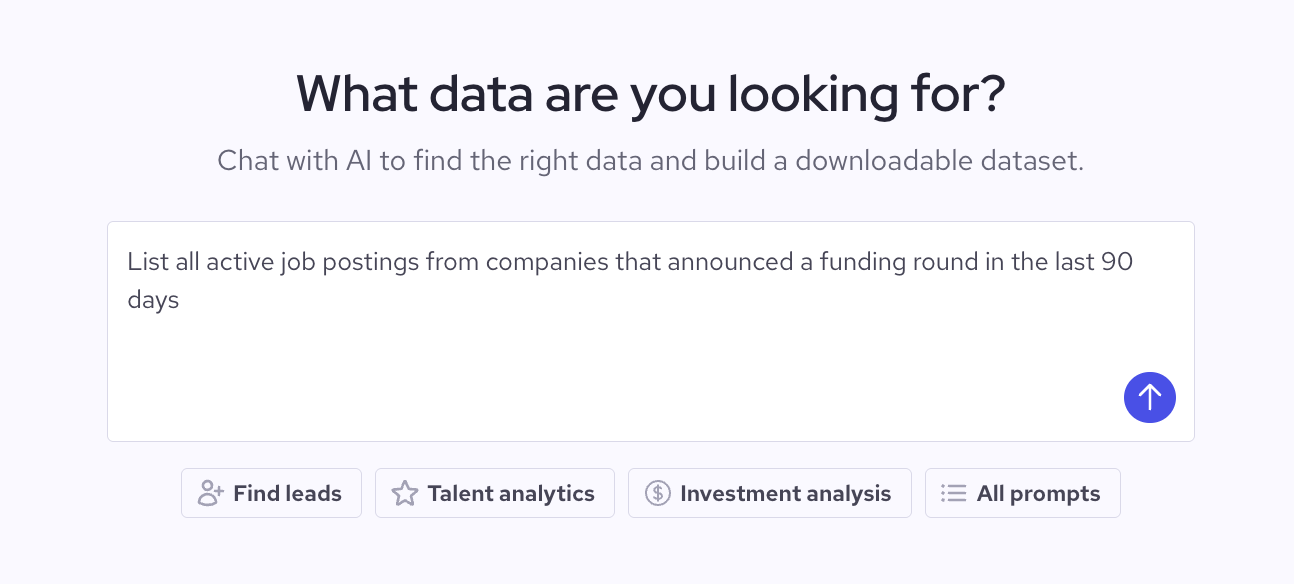
One of the tools you can use is our AI Data Seach tool. Simply type in your request, and the tool will return a list of leads you can use to download:
4. Enrich your CRM or outbound list
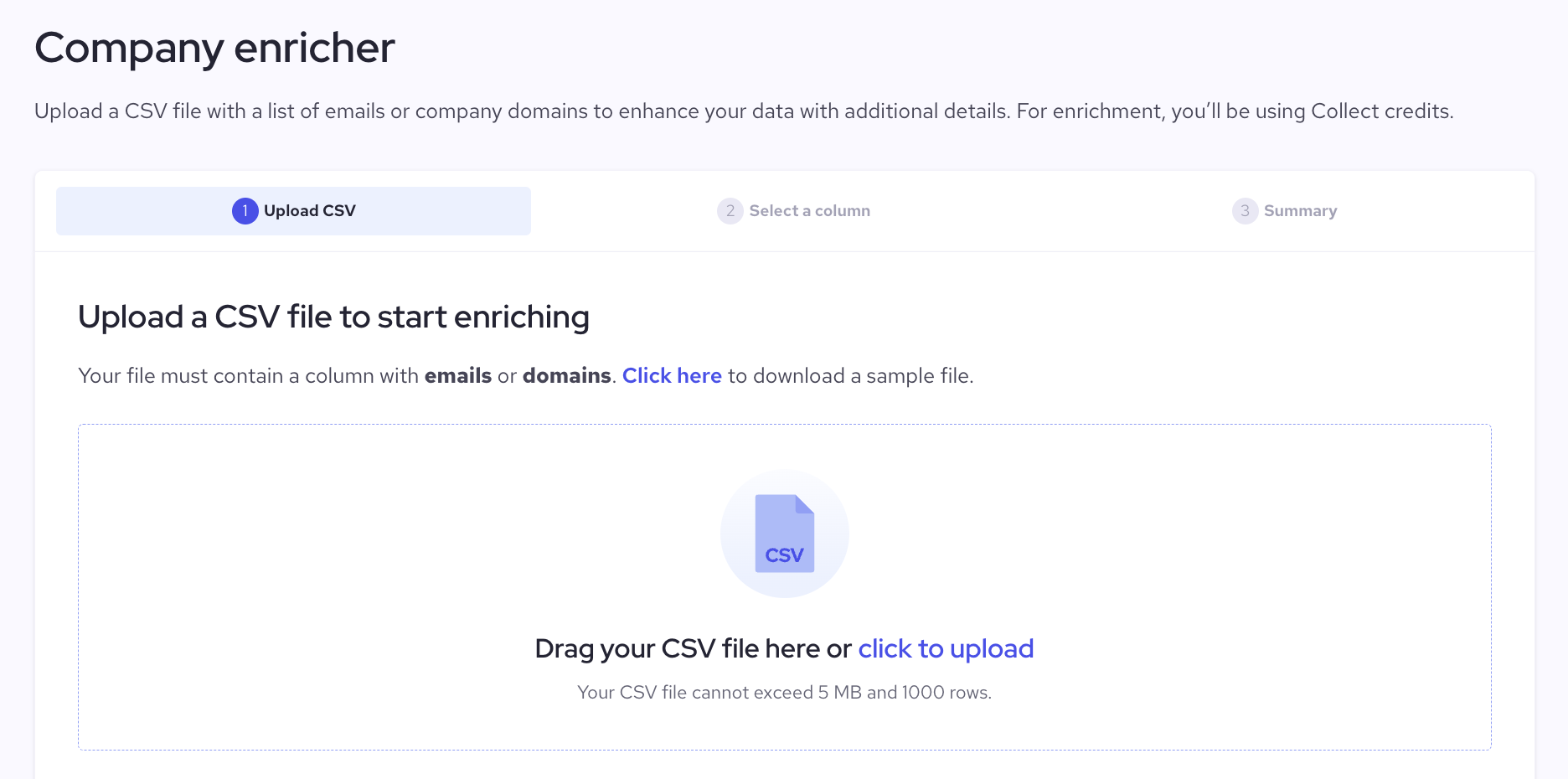
If you already have a leads list, you can enrich them with additional firmographic data, such as employee count, industry, or headquarters location. All of this data will help you to personalize your outreach and improve lead scoring accuracy. You can use Company Enricher for this specific purpose:
5. Launch personalized campaigns
Use the enriched data to craft segmented, targeted campaigns. Whether it’s cold email, LinkedIn outreach, or retargeting ads, personalization increases engagement and response rates.
6. Monitor performance and iterate
Track campaign performance to understand what’s working and where drop-offs occur. Over time, refine your filters, update your ICP, and explore additional signals (such as job posting or review data) for improved targeting.
B2B sales lead generation tools to consider
With so many tools on the market, it’s important to choose ones that align with your lead generation goals, data needs, and budget. Some tools focus on helping you discover and verify emails, while others offer broader datasets and API access for enrichment and segmentation.
Below is a comparison of popular B2B lead generation tools, including Coresignal, to help you find the right fit based on your use case.
How to automate the B2B lead generation process?
Automation can significantly reduce manual effort, accelerate lead discovery, and keep your sales pipeline full. Here’s how to automate key parts of the process:
- Use a lead database with API access – Platforms like Coresignal allow you to extract leads on demand using firmographic and technographic filters. This keeps your lead lists fresh and relevant.
- Integrate with your CRM – Sync leads directly to your CRM to reduce data entry and ensure real-time updates. Use tools like Zapier or native CRM integrations.
- Set up email workflows – Use outbound tools to automatically trigger personalized emails based on lead behavior or segmentation.
- Deploy chatbots – Capture leads directly on your website 24/7 and feed them into your CRM or lead nurturing workflows.
- Schedule enrichment routines – Automate lead enrichment using tools like Coresignal’s APIs to add missing company or contact data at scale.
Automation works best when paired with strong targeting logic and quality data. It’s not about removing human input but about using your time where it matters most.
6 common B2B lead generation mistakes to avoid
Even well-intentioned lead generation efforts can fall flat due to avoidable missteps. Here are some of the most common mistakes B2B teams should steer clear of:
- Using outdated or low-quality data – Inaccurate data leads to wasted outreach and poor conversion rates. Prioritize freshness and completeness.
- Lack of a clear ICP – Without a defined ideal customer profile, your outreach will likely miss the mark.
- Over-personalization or automation abuse – Too many merge tags or robotic emails can turn prospects away. Personalize only when it adds value.
- Skipping lead qualification – Not every lead is worth pursuing. Use firmographic and behavioral signals to prioritize.
- Neglecting follow-up – Most B2B deals require multiple touchpoints. Failing to follow up can cost you otherwise qualified leads.
- Measuring vanity metrics – Focus on qualified leads and conversion rates over clicks and impressions.
Avoiding these pitfalls can save you time, protect your brand reputation, and drive better results from your lead generation efforts.
Generate B2B sales leads with Coresignal
B2B sales lead generation doesn’t have to be time-consuming or unpredictable. With the right strategy, high-quality data, and a few automation tools, you can consistently attract and convert the right leads. Whether you’re scaling outreach, enriching your CRM, or targeting enterprise buyers, having access to reliable, fresh data is key.
Looking to supercharge your lead generation? Contact us to learn how Coresignal’s self-service tools and extensive datasets can help you build a smarter, more efficient pipeline.


